


Building a Global Capability Center is not just about hiring fast—it’s about hiring right, at scale, with complete visibility.
As GCCs expand across India and other talent hubs, recruitment becomes more complex. Multiple stakeholders. Specialized roles. Tight timelines. And zero tolerance for process gaps. Talent Acquisition agencies supporting GCCs need systems that can keep up.
What once looked like a straightforward hiring function has grown into something far more complex. Today, Talent Acquisition (TA) sits at the center of business growth, delivery timelines, and long-term capability building. This is especially true as more global companies set up Global Capability Centers (GCCs) and expect their hiring partners to move fast, stay compliant, and scale without friction.
In 2025, agencies that still rely on disconnected tools and manual coordination are finding it hard to keep up. Those that invest in integrated platforms, on the other hand, are building a real competitive edge.
➱ Understanding the Talent Acquisition Landscape Today
Talent Acquisition is no longer just about closing open roles. It’s an end-to-end process that typically includes workforce planning, sourcing, screening, interviews, offers, and onboarding—but the real difference lies in how these steps connect.
Unlike traditional recruitment, modern TA focuses on:
• Long-term talent pipelines
• Employer brand consistency
• Skills-based hiring rather than just qualifications
• Candidate experience across touchpoints
Digital tools, AI-assisted screening, and remote hiring have all become standard. But in reality, technology only works when systems talk to each other. That’s where many agencies still struggle.
And when you’re hiring for GCCs or enterprise clients, the margin for error is even smaller. Global stakeholders expect visibility, predictability, and speed—all at once.
➱ The Real Problem Agencies Face (and Why It Shows Up at Scale)
Most Talent Acquisition, Recruitment, and Staffing Agencies operate across two parallel pipelines:
1. A customer pipeline—from lead generation to agreements and invoicing
2. A talent pipeline—from applications to interviews and assignments
On paper, this sounds manageable. In practice, these pipelines often drift apart. Leads get lost. Recruiters don’t have context. Sales and delivery teams work in silos. And once hiring volume increases, spreadsheets and emails start breaking down fast.
This becomes painfully obvious when agencies support GCCs, where hiring plans are phased, roles are specialized, and delays ripple across global teams.
Odoo 19 addresses this by bringing both pipelines into a single, connected system—without forcing agencies to change how they fundamentally work.
➱ Two Audiences, One System
Every staffing or recruitment agency serves two very different audiences at the same time.
The Demand Side: Clients Who Need Talent
These are businesses—often enterprises or GCC leaders—looking to hire. Their expectations are clear: quick response, structured communication, and zero surprises.
Common issues agencies face here:
• Leads that don’t get followed up
• Slow qualification and proposal cycles
• Manual contracts that delay hiring starts
• Pricing errors and invoicing gaps
With Odoo 19:
• Website enquiries automatically become CRM opportunities
• Follow-up activities are assigned without manual chasing
• Agreements are sent and signed digitally
• Pricing is calculated based on defined logic, not guesswork
• Invoices flow directly from closed deals
Sales teams and recruiters finally see the same information, at the same time.
➱ The Supply Side: Talent That Actually Delivers
On the other side is the talent pool—consultants, freelancers, and job seekers. For GCC hiring especially, this often includes engineers, analysts, product specialists, and functional experts who work on global platforms and Centers of Excellence.
Typical challenges here include:
• Manual resume handling
• Missed follow-ups
• Interview scheduling chaos
• Poor visibility into candidate skills
• Difficulty reusing strong candidates
Odoo’s Recruitment module simplifies this more than most agencies expect. Career page applications create applicant records instantly. Recruiters get automated reminders. Candidates book interview slots themselves. Skills are captured during assessments—not buried in notes.
And perhaps most importantly, good candidates don’t disappear once a role closes. They stay visible and reusable.
➱ Flow 1: Client Acquisition – From Website Click to Invoice
This is the customer journey—the part where revenue begins.
This flow focuses on the customer journey—transforming a market inquiry into a closed deal and, eventually, a successful placement invoice.
➱ Stage 1: The Initial Spark (Website –> CRM)
The journey begins on the agency's website.
• Website: A prospective client visits the "Contact Us" page and fills out a specialized contact form.
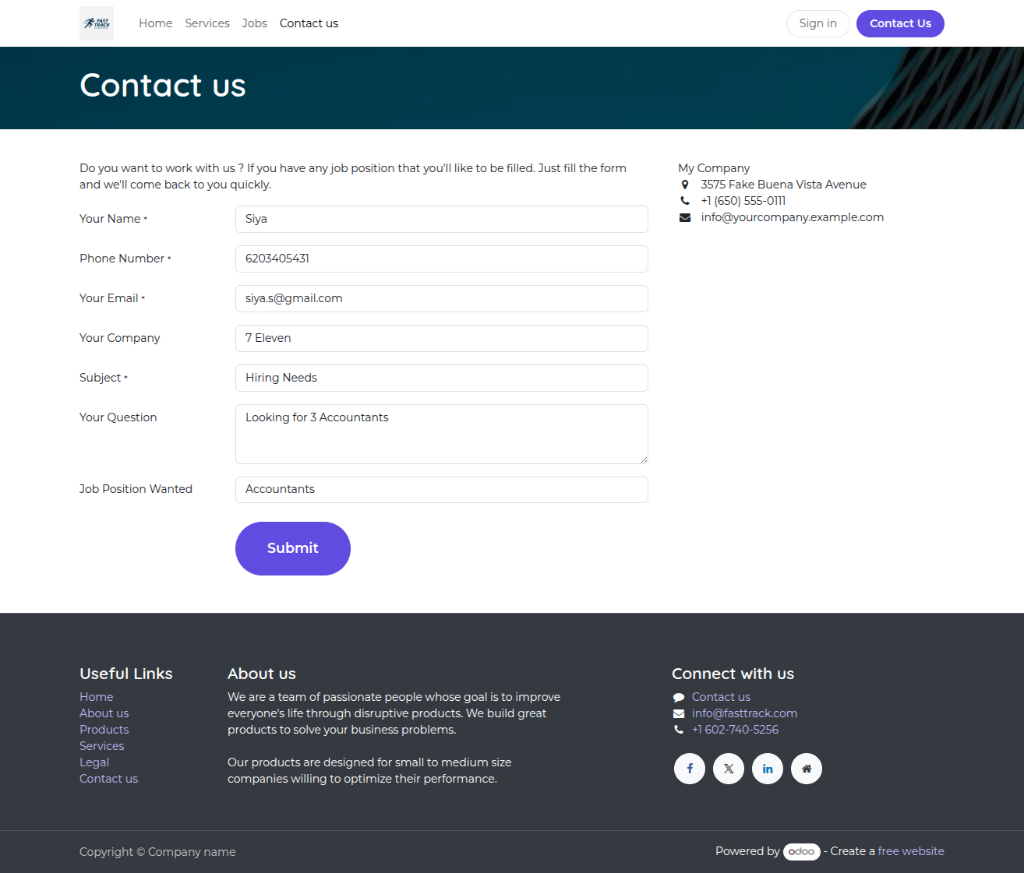
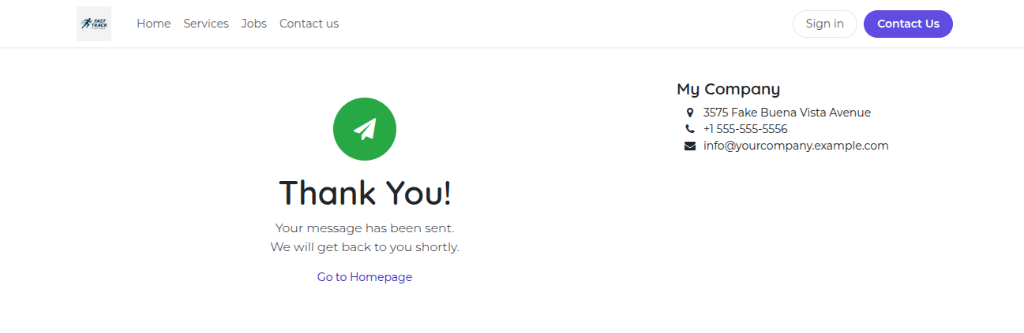
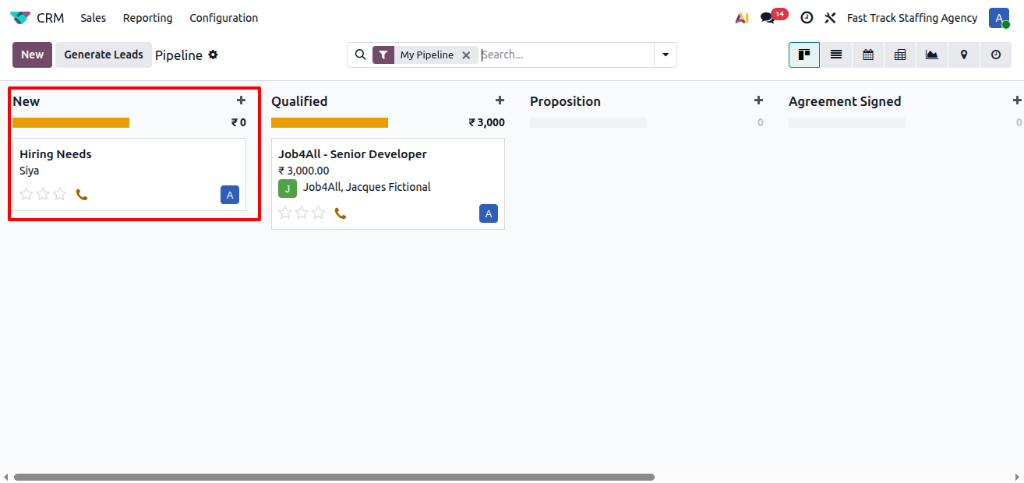
• Result: This action immediately generates an Opportunity in the Odoo CRM, capturing initial details and, optionally, the specific job roles they are interested in.
➱ Stage 2: Qualification and Proposition (CRM)
The CRM system takes over, automating key steps to keep the sales process moving.
• Automated Action: An activity is automatically created for the salesperson to contact the lead and qualify the need.
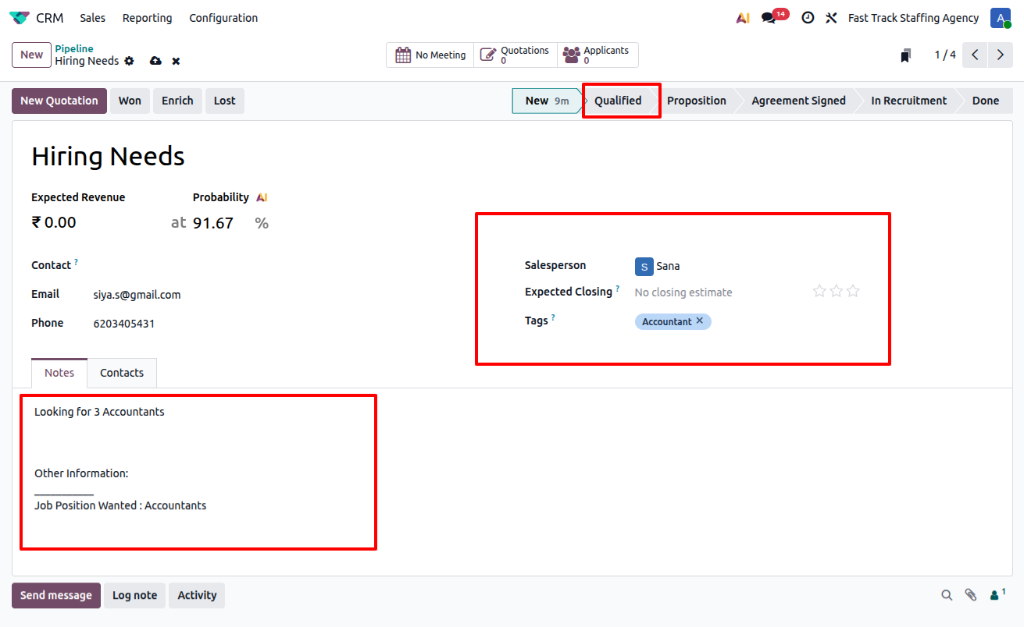
• Proposition: Once the need is understood, the salesperson moves the Opportunity to the "Proposition" stage.
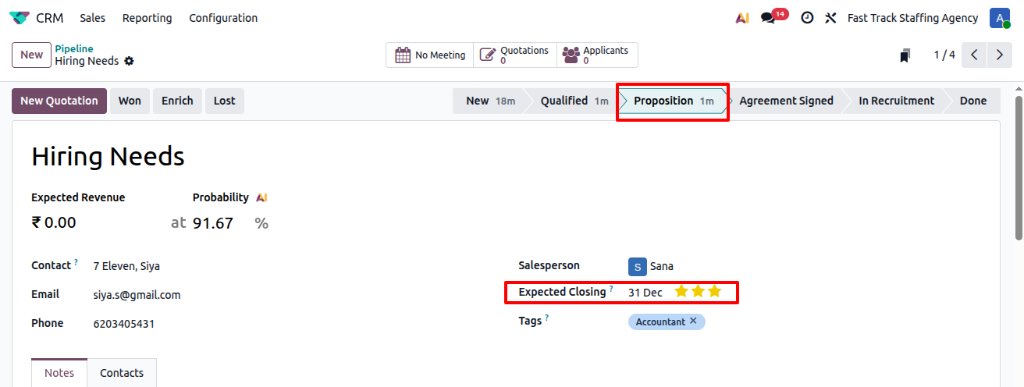
• Instant Agreement: Another automated action sends an email with a Signature Request. This request contains the agency's pre-signed Service Agreement with default terms and filled-in values, accelerating the legal process.
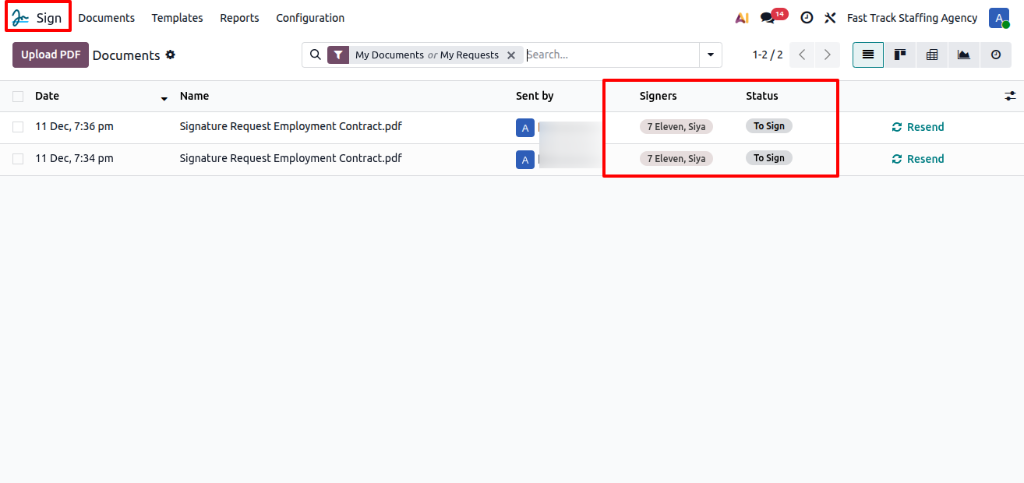
➱ Stage 3: Recruitment Handoff and Closing (CRM —--> Invoicing)
With the agreement secured, the focus shifts to fulfillment.
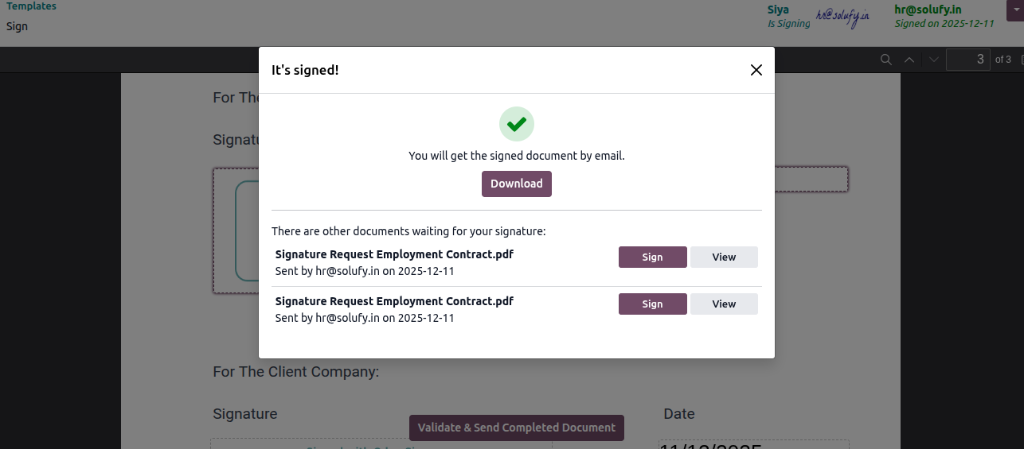
• Agreement Signed: Once the Service Agreement is digitally signed, the Opportunity moves to the "Agreement Signed" stage. The sales team can now open a discussion with the Recruitment team.
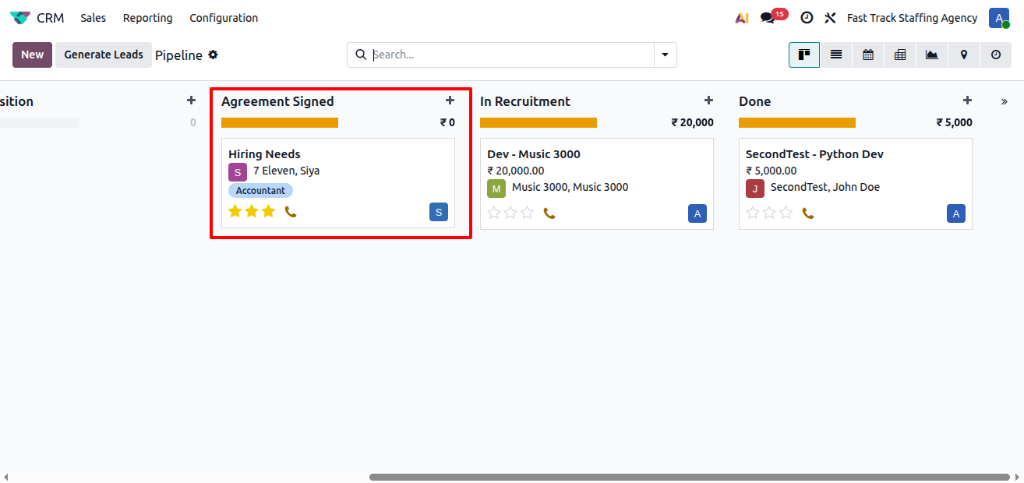
• Recruitment Stage: The Opportunity enters the "Recruitment" stage, where it may remain for a period while the talent search is underway.
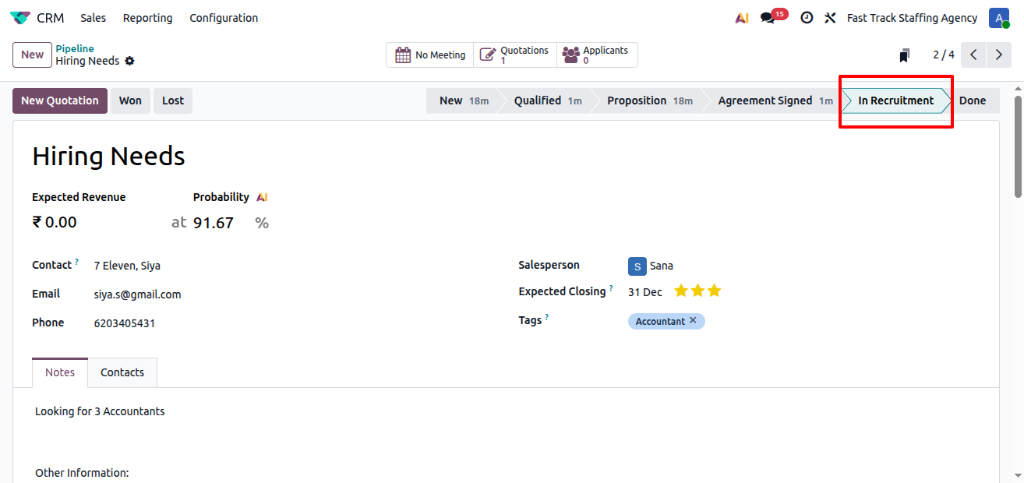
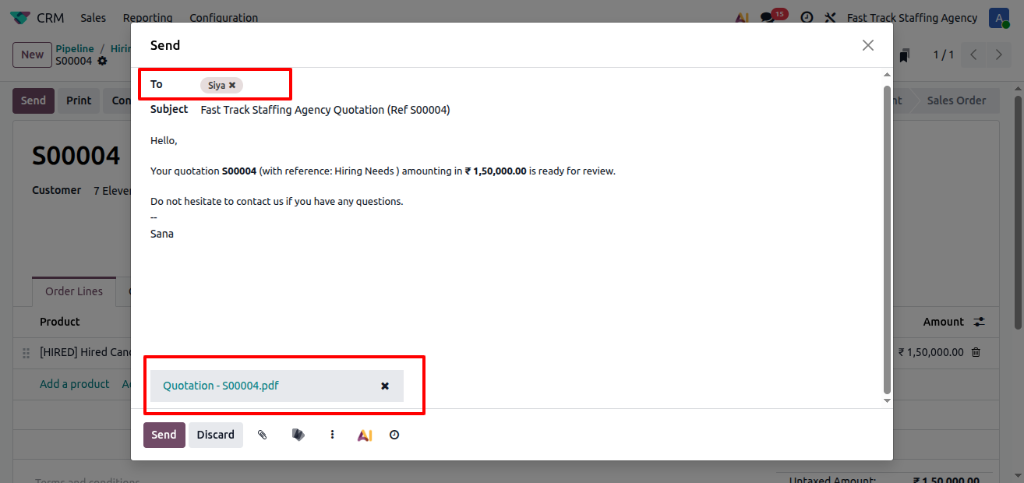
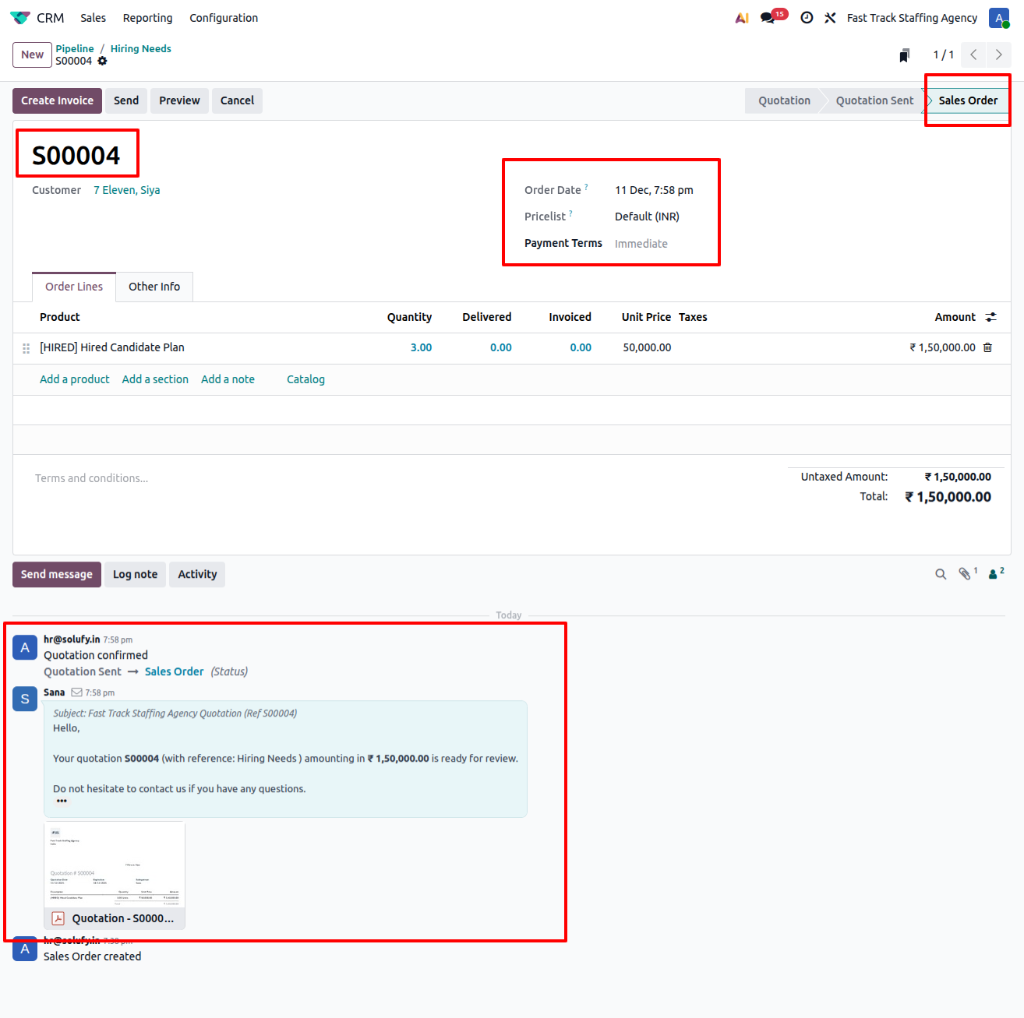
• Closing the Deal: Once the perfect candidate is found and hired, the Salesperson creates a Quotation based on the service agreement and the final salary of the placed applicant. This leads to a Sales Order and, ultimately, the final Invoice sent to the client.
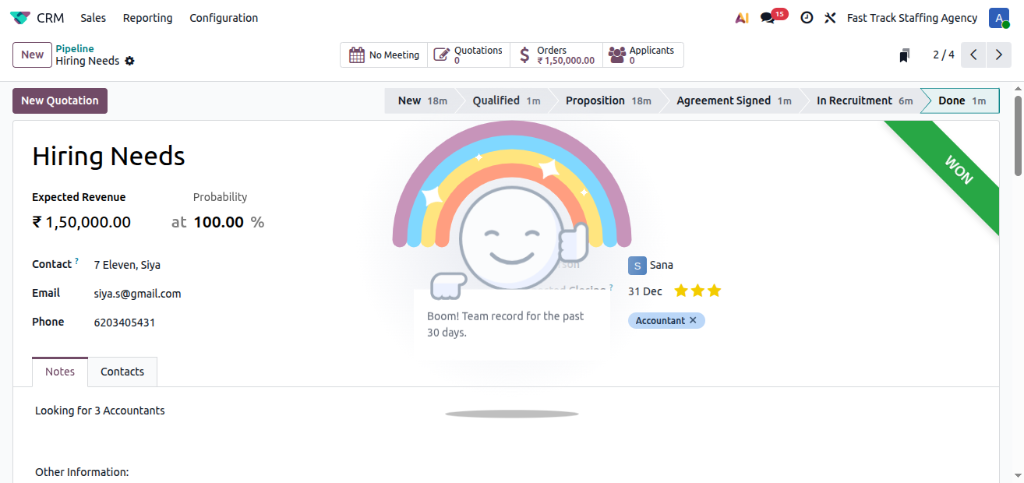
• Final Step: Upon payment, the Opportunity is marked "Done."
Key Feature: Flexible Product Pricing
The system uses a specific product, the "Hired Candidate Plan," which is an undefined price product. This allows the final invoice amount to be dynamically based on the applicant's salary, reflecting standard industry practices.