Why Singapore E-Commerce Businesses Need an ERP
Singapore is among the most advanced digital markets in Southeast Asia. With high internet penetration, reliable payment methods, and reliable logistics, it can serve as a convenient stepping stone for online merchants to sell to a much larger customer base. But it is a difficult market to crack. Customers price shop in seconds and demand next-day delivery. Customers will flee if anything goes awry with the order.
When order volumes increase, most online businesses find themselves faced with the same problem. Inventory is managed on a spreadsheet, orders are coming in from Shopee, Lazada and Shopify, invoices are being manually prepared, and finance teams are spending hours reconciling figures. Enter the ERP.
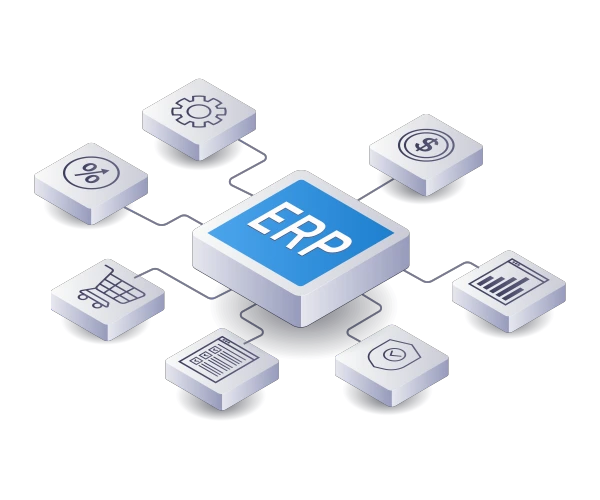
An ERP consolidates sales, inventory, purchasing, accounting, HR and customer data into a single system. Odoo is a modular, open-source ERP platform, which is why it's a favorite among emerging Singaporean sellers; you can begin with only the apps you need and add additional apps as you expand. Here are 10 real-world ERP use cases for your e-commerce business.
10 Ways ERP Can Help Singapore E-Commerce Businesses Grow
1. Real-Time Inventory Visibility
Upselling is the quickest path to losing customer trust. An ERP allows you to see your stock levels in real time at warehouses, with 3PL partners and across every sales channel. A Lazada sale sees your Shopify store and all other listings automatically update. This means no stockouts, less dead stock, and extra cash sitting on your shelves.
2. Automated Order Management
Orders from every marketplace and your website are consolidated in a single system. Our ERP will automatically authorise these, check availability, produce delivery notes, and invoice without additional input. Less repetition means reduced errors, speedier delivery, and satisfied customers.
3. Multi-Channel Selling Made Simple
Top Singapore Marketplaces to Sell each Singapore seller lists products on a few different marketplaces except for the storefront. This results in mismatched prices and incorrect listings. With an advanced ERP Integration in Singapore, the product information, prices, and stock levels will be updated across all channels, so more marketplaces do not mean more chaos.
4. Built-In GST and Regulatory Compliance
Tax compliance is a true pain point for growing companies. Singapore's GST (9%) and filing obligations need to be precise, and errors are expensive. A GST-enabled ERP manages local taxation rules automatically, generates high-quality audit-ready records, and delivers IRAS-compliant and audit-ready reporting. It may also enable Peppol e-invoicing via a dedicated Peppol connector – critical for companies providing bill-to-corporate and bill-to-government sales.
5. Multi-Currency and Cross-Border Growth
Most Singapore sellers grow into Malaysia, Indonesia, Thailand and further afield in just a few years. Selling into new countries involves multiple currencies, exchange rate fluctuations and landing costs. Multi-currency ERP tracks every transaction in the appropriate currency, automatically converts it and ensures your books are accurate even as you grow across regions.
6. Smarter Demand Forecasting and Purchasing
Bestsellers such as 11.11, 12.12 and the Great Singapore Sale can define or break your year. ERP analytics leverage past sales, seasonality and marketing campaigns to predict demand. Reordering rules and purchase suggestions buy you the right amount at the right time – instead of what you think you need, which inevitably ends with a stockout or excess inventory.
7. Streamlined Warehouse and Fulfillment
Barcode scans, bin locations, pick-and-pack procedures, and courier integrations speed up filling and minimize errors while picking. Whether you've got your own warehouse or go with a third-party logistics provider, the ERP enables everyone to operate from a single shared set of data. Faster, error-free fulfillment will directly translate into more positive reviews and repeat customers.
8. Faster, Smoother Payments
Singapore customers love paying with familiar local methods. A PayNow integration in Singapore lets payments match invoices and orders automatically, reducing manual bank reconciliation and speeding up order confirmation. Finance teams save hours every week and cash flow becomes easier to track.
9. Accurate Financial Reporting and Profitability Insights
It's not enough to know what's bringing in revenue. Marketplace fees, shipping, returns, packaging and advertising eat into margins. An ERP will pull all those expenses together so that you can understand real profitability for each SKU, on every channel, from every campaign - and spend your resources on what actually makes you money.
10. Scalability Without a Proportional Increase in Headcount
Why your business is stacking up cost, ERP automation takes on the extra light load of invoices, reconciliation, reporting, and even payroll as transaction volume increases. With CPF-driven payroll, your HR and finance team can run a larger headcount without a proportionate increase in admin staffing. Grow revenue, minimize costs.
What to Look for in ERP Development in Singapore
Choosing the software is only the first half of your decision. It's the partner that makes the real difference in making sure ERP gets integrated into your business. Good ERP development in Singapore goes way beyond the plug-and-play modules. What about?
Build your own modules to fit your unique workflows, like bundle prices, boxes on subscriptions or rules for the marketplace.
Do I localize the system to Singapore taxes, invoicing formats and reporting requirements?
Connect your ERP to marketplaces, payment portals, couriers and accounting.
Post go-live: continuous support, upgrades, and training
While others sell a fuzzy list of opportunities, a co-seller who understands the pains of eCommerce will flag your all you want lists of potential high-traffic timeframes (flash sales, high return rates, multiple warehouses, etc.) long before you have to.
How ERP Implementation in Singapore Works
A successful ERP Implementation in Singapore follows a clear, phased approach that reduces risk and avoids disruption to your daily sales.
Discovery and planning: Your partner defines existing processes, challenges, and objectives.
Configuration & customization: Modules are configured and customized to your workflows.
Data migration: Products, customers, suppliers, and opening balances are prepared and imported.
Monitoring and learning: Your employees test on actual cases and get the system ready to use.
Go-live and support: The system becomes operational with supportive deployment and life-cycle Management.
Rushed implementations are the most common reason ERP projects disappoint. Taking the time to define requirements properly saves far more than it costs.
Grants That Can Reduce the Cost of ERP
A lot of Singapore SMEs think ERP is a 'big-ticket' investment. Many of these government grants or initiatives can defray a significant portion of the implementation fee for qualifying companies. Your company's profile is likely to qualify you for such schemes such as the Productivity Solutions Grant or other digital transformation grants, as these change periodically. Check with the agency and with your ERP vendor before applying.
Final Thoughts
Why Singapore e-commerce companies need an ERP isn't just a back-office tool for Singapore e-commerce companies. It's a growth engine - one that takes friction out of your operations, helps you make better decisions, and provides the foundation you need to grow into new markets without hesitation. From automated compliance to smarter forecasting to cleaner accounting, it all adds up.
The solution is selecting the right partner. Seek a partner with a demonstrated ability to deliver bespoke solutions, marketplace access, local compatibility and support.
Want to make your online business more efficient? Work with SerpentCS to develop an ERP implementation built around your e-commerce and internet-selling operations, from implementation to integration, to training and support.
FAQ
ERP (Enterprise Resource Planning) is a unified platform that integrates your data for sales, inventory, purchasing, accounting, HR and customers. It eliminates the need to manage multiple disparate applications and spreadsheets for Singapore e-commerce businesses. Your orders, stock, invoices and reports all remain aligned, eliminating the risk of mistakes and enabling you to support higher volumes of orders without chaos.
It varies according to the number of users, the modules you require, customization, and the volume of data you need to migrate. A modest seller with few specific needs will pay significantly less than a multi-warehouse, multi-channel enterprise. It's wise to go for the standard modules first and then add those you need as you expand; a good vendor will be able to quote an exact figure once they understand your needs.
A minimal version will be up and running in 2-3 weeks, complex, advanced customization and integrations will take a few months. The implementation speed depends mostly on your feedback and your process documentation; the crisper your process is when you start the implementation, and the faster your team approves your steps, the less time it will take to implement. Being slow is the fast lane to being slow!
Is it possible to connect marketplaces to my ERP? Yes. Marketplaces, websites, payment gateways, and courier services - connect them to your ERP in Singapore. Products, prices, stock and orders update each other automatically, saving you manual input and other operational risks. Check with your partner if the features you want are available before implementation.
Yes. A Singapore-based ERP can automate GST calculations, produce valid tax invoices and generate accurate reports. It reduces the workload at tax time and eliminates the scrubbing required when you need audit-ready reports. New rules are introduced regularly so you need an implementation partner that knows what's changed.
Odoo is a good solution for scaling sellers because it's flexible and inexpensive to make changes. You can start with sales, inventory and accounting and later add modules for CRM, purchasing and payroll. Because of Odoo's open-source core, you aren't limited by proprietary, inflexible features.
Offers and availability by ESM agents and vendors for qualifying SMEs that choose to go digital are subject to change without prior notice, so check with the relevant agency and your ERP vendor before making a decision. An experienced partner can also help you to navigate the application process.
ERP developer in Singapore: customize, modify & adapt your software to the needs of your business with our building blocks, custom features, and workflows.
ERP deployment Singapore: installation, configuration, testing and go-live of the system with data migration and training.
ERP integration in Singapore: ERP integrates with other tools like marketplaces, payment gateways, couriers, accounting software etc.
Most scaling e-commerce businesses require a mix of all three.
A trusted partner isn't suddenly gone once go-live has been achieved. You should expect continued technical support, system upgrades, bug fixes and additional training as your team expands. Periodic reviews lead to additional areas for you to automate and increased value.
Pick an e-commerce developer with proven skills in developing e-commerce websites, who knows the legal requirements in your country, has a good portfolio of delivered projects and happy clients and offers well-defined post-launch support. Remember to factor in the cost and scope of work.