Your warehouse manager will never lie awake in bed at night worrying about something catastrophic. More often than not, they're worrying about the little discrepancy. 120 units in the system, 96 on the shelf, waiting for a customer order to come in at 5:00 pm.
Space in Singapore is pricey, delivery expectations are sky-high, and margins on imported products are razor-thin. In that kind of environment, a stock error isn't simply an admin issue – it's paid-for storage space with the wrong stuff, or a lost sale because the right stuff isn't where the books say it should be.
If you want a little more context around what you're being sold and what you should expect from a good inventory management system in Singapore and how you can tell if you're ready for it, let's take a look.
Why spreadsheets stop working
Most companies get started on Excel, and that's okay. The problem arises when the business continues to grow in intricacy faster than a spreadsheet can keep up.
Typical warning signs include:
Two people have altered the same file, one of them has replaced the other's work.
Each department (sales, purchasing, and the warehouse) has a different definition of "stock on hand".
Stock that you are selling via Shopee, Lazada or your own website will not be tracked in real time.
Month-end counts reveal losses nobody can trace.
Freight, duties and handling, among other things, are listed on a different sheet and do not contribute to the item cost.
None of these is a software failure in itself. They are signs that the process has outgrown a manual tool.
What good inventory management software should do
Features vary by product, but these seven capabilities separate a real stock control system from a glorified list.
1. Show stock by location and status, not just quantity
'400 units' doesn't tell you much. Are they stored in your central warehouse, in a retail store or with an external third-party logistics provider? Are they allocated to a customer, waiting for quality control checks, or on route? Well-managed warehouse software will manage stock by location and in-progress so your staff doesn't make false promises.
2. Update in real time
Availability should update instantly for everyone when a sales order is confirmed or purchase order is received. This one behaviour eliminates most overselling and double-handling.
3. Support barcode and mobile scanning
Receivers, Pickers, Packers, and Transfers using Handheld Scanners or Smartphones reduce manual keying errors. For a group working hundreds of lines a day, the difference in accuracy is typically evident in a matter of weeks.
4. Automate replenishment
Reorder rules based on minimum and maximum levels, lead times and sales history enable the buyer to react before a stockout occurs rather than after. They also prevent you from over-ordering, which can be critical when storage space is costly per square foot.
5. Keep records of lots, serial numbers, and expiration dates
Food, cosmetics, pharmaceuticals, electronics - these all require traceability. When your supplier initiates a recall, or if a customer logs a warranty claim, you should be able to identify which batch shipped to which customer in a matter of minutes - not days.
6. Calculate true product cost
It is not the cost of the product. When faced with the invoice price, freight, insurance, duties, handling and exchange rate movements all alter the true cost of the stock to you. The landed cost allocation distributes these costs over the appropriate stock so your margin calculations are accurate. For Singapore traders and importers, this is often the most surprising!
7. Report on what matters
Stock ageing, turnover, slow movers, forecast availability and value is just a few clicks away. If a manager has to prepare a report manually every month, then a system isn't doing its job.
Where ERP fits in
Individual inventory tools are easy to use in a single warehouse with simple sales. But stocks don't sit in a vacuum. They influence purchasing, sales, accounting, manufacturing and even HR and logistics.
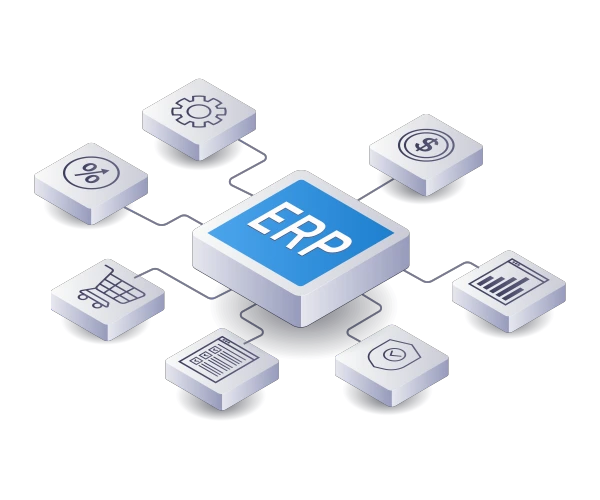
This is where the value of an ERP (enterprise resource planning) system comes into play. Rather than having a separate system to manage stock, invoices, and purchasing, an ERP uses a common database for all three. When a goods receipt is entered, the stock entry and accounting entry are both created at the same time. When a sale is confirmed, the stock is reserved and the invoice is created.
A quick guide: if you've got multiple warehouses, sell products through multiple channels, buy in foreign currencies or run a second legal entity, then inventory management in an ERP is often a smarter option than a stand-alone system. If you've got a single warehouse, small product range and only relatively straightforward transactions, then a lighter-touch solution might be fine.
Why ERP integration in Singapore needs careful planning
Choosing software is only half the job. The other half is making it work with everything else you already use. ERP integration in Singapore commonly involves:
E-commerce marketplaces. Sync Stock and Orders to Shopee and Lazada or your own online store.
Courier or logistics provider. Shipping labels and tracking numbers should flow back into the order record.
GST accounting and tax. It is important to keep data so that GST treatment can be attached to each individual transaction and reconciliation will match.
SG e-invoice Agenda: Invoice Now. Phase 1: Invoice Now e-invoicing network. Migrating businesses to the Invoice Now platform. New GST registrants have had their requirements since 1 Apr 2026; existing registrants will join in phases through 2031. See IRAS for your own date rather than assume.
Payment gateways and banks. Important when stock, sales and cash need to add up.
Trading docs. You may require a separate process or a plug-in to connect the Trade Net and such other workflows.
A common mistake is treating integration as an afterthought. Every connection is a place where data can go wrong, so agree which system owns which data before anything is built.
When custom ERP development makes sense
Most companies can be managed with out-of-the-box functionality and simple configuration. Custom ERP development is only justified if one of your workflows is truly specific to your business – be it an approval sequence, unique picking procedure, or unique management report.
A good practice is to divide statutory needs from business ones. GST processing, e-invoicing and payroll regulations are likely to evolve, so you will better address them with the regulated standard or localised modules. You should reserve a lot of the custom work for whatever is truly distinctive about your business. Also, heavy customisation comes with a price at upgrade time, so make sure each feature justifies itself.
Inventory control as part of digital transformation
Digital transformation may seem like a wide, abstract programme. But for many Singaporean SMEs, it begins with something tangible: providing access to accurate stock and order data.
As soon as your inventory numbers become reliable, the benefits follow. Better demand forecasting, negotiating with suppliers based on purchasing history, and reacting more swiftly to customers are all within reach. Without accurate figures, these recent innovations like analytics dashboards or automation will base their insights on shaky ground.
While programs like PSG, EDG and the new EDGE grant could apply to digital projects, their terms, funding limits and which types of digital solutions they support can evolve. Check the Business Grants Portal before including any grant in your budget.
Common mistakes to avoid
From the projects we see across the region, these are the issues that cause the most trouble:
Getting awful data imported. Duplicated SKUs, inconsistent measures and confusing categories become a permanent part of your data if you import it as it is. Clean it before you load it.
Designed to one person's routine. Systems designed to support the way one senior user operates drive up costs.
Avoid warehouse training staff. It's the people who scan items, monitor goods, and move things around on the floor on a daily basis who determine whether your data is accurate or not.
Ignorance is bliss. Only turn on all services together when you are confident you've got the receiving, delivery and replenishment functions working perfectly.
Failing to set up the tax in advance of the go-live. It's much simpler to establish GST scheme and import treatment in advance than to change the setup after go-live.
How to evaluate options
Whether you consider a global suite, a regional vendor or an open-source platform, shortlist based on evidence rather than brochures:
Ask for references from Singapore businesses with a similar profile, and speak to them directly.
Request a demo using your own scenario: one import, one landed cost allocation, one multi-location transfer and one marketplace order.
Ask what is standard, what is configuration and what is custom code, and who supports each after go-live.
Ask how localisation updates such as GST or InvoiceNow changes are delivered.
Get a written scope covering data migration and training before comparing prices.
A practical way to start
Prepare before talking to a vendor. Create a one-page document on your warehouse locations, your 3 biggest stock issues, your sales channels, your GST and InvoiceNow status, and 2 reports you wish you had every week. That 1 page will make all demos more understandable and instantly identify whether a system suits how you trade.
FAQ
Inventory management software monitors inventory levels, location, and stock movements, as well as reorder levels. An ERP not only manages inventory, but also integrates purchasing, sales, accounting and other processes into a single system. Single software Inventory management is all you need, but if the root cause of issues lies in poor communication between departments, an ERP can help.
Not always. If you only have one place, one product line and one or two transactions a year, then a spreadsheet or simple cloud-based software could be enough. As you add more locations, more product lines, spend foreign currency or acquire a second entity, this need increases.
ERP-based systems: Many tools will let you specify the GST treatment of each purchase or sale - for example, standard-rated or zero-rated (or import-related) - which is then automatically included in your GST return. The software captures the treatment you specify but your accountant or tax adviser determines the correct treatment. Check IRAS for up-to-date treatment.
Landed cost is the total cost of getting your product into your warehouse, including freight, insurance, duties, handling and occasional exchange rate differences. Knowing the actual landed cost makes your margin calculations more accurate. Cost allocation software apportions these costs to particular stock, giving a more accurate perception of profit from individual products.
What connector connects your marketplace listings to your ERP, a connector would take orders coming in, and push the stock levels out. But which system will be the master for the stock quantities? Test with live orders first before you go live. Also, check who keeps the connector if the rules on the marketplace change.
Not so simple. Typically, a single-warehouse business with clean data is faster than a multi-entity business with multiple integrations. Request a written plan with milestones and be skeptical if there's no mention of data cleaning, testing, or training in the plan.
Think of it when a workflow is really specific to your business and there is no way of fulfilling it by configuration. Keep statutory requirements on a standard or localised module, and implement custom work sparingly to keep upgrades manageable.
Accurate, real-time stock data is generally the most sensible first step. It provides a solid foundation for your forecasting, negotiation with suppliers and serving your customers, and will make later tools like analytics or automation that much more powerful.