Manufacturers of cosmetics in Singapore generally do not have a production problem. They have a visibility problem.
You walk into an up-and-coming skincare or beauty brand doing SGD 2 to 8 million in revenue and everything looks like this: inventory is managed on a spreadsheet, Shopee and Lazada orders are (sometimes) integrated with a fulfilment centre, the accountant is still reconciling GST at quarter end, and no one can remember what the HSA notification number is to refer to for every product variation without clicking into three different spreadsheets. None of this features until the business hits a certain milestone like scaling its wholesale presence, launching to Malaysia, or working with an overseas private label manufacturer. . That's when people start thinking "ERP."
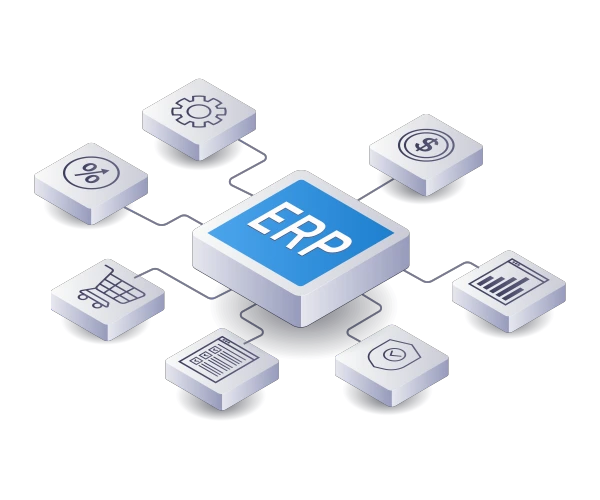
When brand operations are fragmented across online channels, physical counters, and consignment stock, a unified ERP integration in Singapore brings inventory tracking, HSA compliance, and billing into a single verifiable system.
But first, to define "what ERP does", it's worth being blunt. ERP isn't primarily a manufacturing efficiency tool, although much of the writing on "ERP for cosmetics" presumes the existence of a batch-mixing, formulation-costing factory floor. A significant proportion of cosmetics companies in Singapore do not manufacture in the traditional sense; rather, they source, import, sell private-label or sell direct-to-consumer, and increasingly across three or four channels simultaneously. Their limiting factor isn't production rate; it's data silos and adherence to regulations.
Why cosmetics businesses hit this wall earlier than other retail categories
If a fashion or F&B retailer isn't necessarily burdened with it, then here's what a cosmetics and personal care retailer has to deal with.
First, any product you sell in Singapore has to be notified to the Health Sciences Authority (HSA) before it hits the shelves. This is not a licensing procedure like medicines or pharmaceuticals; HSA doesn't approve formulas in advance of sale. However, it is still required that a product be notified (a lipstick in one shade and smell is a different product from the same lipstick in another), the notification is valid for only one year, and products that are not notified are subject to a SGD 20,000 fine (with up to 12 months in prison) and a record is kept for two years for the HSA.
None of that is so exciting when a brand has fifteen SKUs and a single founder, reminding themselves when to replace notification expiry dates in a calendar reminder. But it can become very real for a brand with sixty SKUs, four channels, and a private label partner adding new variants each quarter, with staff changing in the operations team who 'just knew' that one product was up for renewal next week. That's when notification tracking needs to be central to a product database, not a compliance folder.
Second, cosmetics stock isn't shelf-life proof. Formulations will become rancid and even trading businesses that don't even handle a formulation will need to allocate batch numbers and expiry dates for recall traceability and markdowns prior to it go rancid. A spreadsheet could handle this for a single warehouse. It becomes stressful the minute stock is held across a 3PL, retail consignment partner and Shopee-managed fulfilment centre.
What ERP actually changes for a business at this stage
In this case, that's precisely what an ERP system can do for you. The real impact is hidden in the bit that isn't glamorous: one reliable, consistent single file of product, stock, order and compliance data that all functions (warehouse, finance, e-commerce, customer service) access and update-rather than five individuals having five different answers.
In reality, for a Singapore fashion business, that will manifest itself in three locations.
Inventory and channel merging. Orders from Shopee, Lazada, TikTok Shop, a Shopify storefront and brick-and-mortar retail are all funneled into a single stock ledger, preventing the operations team from having to do manual end-of-day reconciliations across channels. This is more of a concern for cosmetics than most other categories, because a higher percentage of SKUs will have a viral moment, so carrying costs are more expensive if a hit doesn't stay in stock.
Product and compliance records linked. Every SKU or variant contains its HSA notification number, notification expiry, batch number, and shelf-life as fields rather than a note in someone's email inbox. When it gets to a year before the notification, that should be a warning in the system, not left in the head of someone leaving the company.
Screened sales means easier closing of books for the cosmetics firm GST-registered cosmetics sellers, especially those crossing the SGD 1 million registration threshold as they scale up, need clean, easily auditable sales and purchase data in order to get their quarterly GST filing done on time. And that need will only become more urgent in the next few years: IRAS has been progressively piloting IRAS Invoice Now, the national e-invoicing infrastructure based on the Peppol network, since May 2025 and is accelerating its rollout over the coming years, from voluntary early adoption to compulsion for all new voluntary GST registrants from April 2026, with a further phased expansion to the rest of the general GST-registered population likely to run through 2031. A cosmetics business that continues to invoice wholesale buyers or B2B distributors by PDF or manual data entry will eventually have to get its finance or ERP system into the habit of generating Invoice Now-compliant invoices – which is far easier to do at the outset than to retrofit for after the deadline comes.
Localisation is not automatically the right answer
Let's be clear about one trade-off that vendor content tends to gloss over: not every Singapore special requirement demands a back-and-forth, or a bespoke system. Statutory, GST, Invoice Now formatting and CPF-linked payroll (if you have local staff) are all statutory requirements and should be implemented correctly irrespective of the ERP system you choose. Most of what an organisation perceives as a "Singapore requirement" actually is an operational choice: a very specific approval flow for requisitions, a way of sorting influencer-gifted stock, a finance dashboard layout. Expecting every single one of them to be hard-coded by an ERP vendor will result in costly, fragile customisations. The more important question to ask before any project proceeds is whether an ERP requirement is statutory, operational or simply habitual. Businesses that fail to clarify the differences can find they are paying extra just to turn on a reporting filter or set a user permission.
Three scenarios that show the difference
A Singapore-owned and operated skincare brand that sells on Shopee, Lazada, and their own website and hits roughly SGD 3MM ARR, they frequently encounters their initial stop: inventory accuracy. Stock counts diverge across channels, promotional inventory is over-distributed, and founders are doing GST reconciliation on weekends. ERP is important mainly because it pulls all the channels together and keeps financial data clean; formulation management is a no-go for this business since they have no manufacturing capabilities.
A regional distributor with subsidiaries or agents throughout Singapore, Malaysia and Indonesia has to deal with the complexity of multi-currency accounting singapore, intercompany reconciliations and getting a Singapore-based finance team the consolidated view of finance without having to wait for the individual country bookkeeper to send over a spreadsheet. It is here that multi-entity ERP capability, rather than multi-warehouse inventory management, will make the difference. A system that does a good job on one legal entity but adds other countries as an afterthought creates more work, not less.
A contract-manufactured private label brand sourcing through an offshore factory requires the ERP to monitor purchase orders, inbound batch and expiry information and landed cost (freight, duty, currency conversion) well enough that gross margin reporting has meaning. This is where many manufacturing-oriented ERP features (batch genealogy, formulation costing) are crucial when the business is actually manufacturing its products, and not when it is merely reselling finished products that were notified before shipment.
The reason to separate out these three requirements is that "ERP for cosmetics" is not a single requirement. A brand in the first scenario that purchases a heavyweight, manufacturing-centric platform built for the third scenario will pay for modules it doesn't need, and won't have a satisfactory connection to e-commerce channels.
Where this goes wrong
Most common mistake is fitting platform (it's built for cosmetics) rather than fitting business model (a formula-intensive manufacturing ERP is not the right solution for a company that imports finished, already-notified stock and just needs good inventory and order control). Conversely, a simple inventory solution, just an online ecommerce inventory tool with no batch tracking or expiry tracking, quickly becomes a real problem when that recall or expiry alert needs to be traced back to stock.
The second recurring problem is poor data migration. Anecdotally, businesses that have experienced rapid growth from sales by the owner, with inconsistent naming conventions for products, multiple listings of products on Shopee and Lazada seller centres, and incomplete or inconsistent HSA notification records. Moving into an ERP without tidying this up first just makes more expensive clutter.
One third is considering grant funding to be the justification to implement ERP rather than a way to reduce the impact of a decision already deemed to be worthwhile in its own right. Enterprise Singapore has traditionally supported ERP and digitalisation efforts through schemes including the Enterprise Development Grant, and has indicated it will bundle a number of schemes into a new EDGE grant which is scheduled to be introduced in 2H26. Grant application terms (percentage levels of support, and categories of activities supported) are subject to change, so should be confirmed with Enterprise Singapore or a grant-registered vendor at the time of application. An ERP business case should never be reliant upon a percentage of support that is subsequently withdrawn.
What to check before choosing a provider
More than just price and demo shine, a handful of other questions often help differentiate a good match from an expensive mismatch: does the system treat product variants and HSA notification numbers as first-class data, or need custom fields to be spliced in? Does it aggregate orders only from those couple of marketplaces that the business actually sells products through, or from all e-commerce plugins they support? If the business plans to move to additional regions, will the platform support multiple entities and multiple currencies immediately, or need to be migrated and merged at some point? And finally, can the vendor provide specific answers to GST reporting and Invoice Now concerns, or say simply that "compliance is supported"?
Where a provider like Serpentcs fits into this picture
Serpent Consulting Services (Serpentcs), an Odoo implementation partner based in Singapore since the early 2010s as part of a larger group established in 2007, is another potential option, simply because of what Odoo is and isn't. Its modular platform (interconnected standalone apps like inventory, accounting, e-comm, manufacturing etc) generally works reasonably well for one and two above - an expanding SME that needs some channel consolidation and integrated multi-entity finance without an SAP-scale implementation price tag. It's less comfortable for one where the real value is its highly specialised formulation and batch-costing expertise at scale - you might prefer an ERP designed for process manufacturing for that. As with any implementation partner, the only sure test is not how they sell themselves but whether they can demonstrate how they've configured product and compliance data to an SME with a similar model, and how their post-go-live support actually performs if something breaks just at the GST filing deadline.
The practical takeaway
ERP won't grow your cosmetics brand. It just deletes those unique frictions, the broken channel data, notification expiries never tracked, manual GST reconciliation that would otherwise hold back a Singaporean company from adding a new channel, new country, new SKU without anything tipping over in the background. The ones with the most value get one that reflects what they really do (trade, distribute, produce), love and distill their data before jump-starting, and accept Singapore's legal obligations as basic ("core") rather than "dogfood" they added post-rollout when the "important" stuff is completed.
Qualifying local beauty and retail brands can offset setup expenses by adopting a supported PSG grant ERP Singapore package tailored for omnichannel inventory and automated compliance.
FAQ
Yes. The duty to notify rests on the "Responsible Person" that introduces the product into the Singaporean market. The HSA has defined this role to be wide enough so that it covers the importer, distributor or retailer of the product, not just the manufacturer. Notification of cosmetic products is done by a Responsible Person (RP), a company registered in Singapore and responsible for introducing the cosmetic product to the market. This can be an importer, producer, distributor or retailer of cosmetic products. So even if you buy in finished branded cosmetics to resell in Singapore, you still have to notify each product individually if you are the one bringing that product into Singapore.
The practical risk isn't the ERP, it's what can happen without that visibility: a notification can quietly not be filed, no one notices because it isn't associated with the product record, and the business delivers a non-notified product intentionally to unknowing consumers. That's an offence, and a breach of the notification requirement is an offence that can be punishable by a $20,000 fine and/or imprisonment for up to 12 months. Businesses are separately required to maintain supply records for two years for HSA auditing purposes, so if notification data and batch data are separated from inventory by residing in alternate spreadsheets, reconstructing that history for auditing will be a headache that isn't necessary.
Not yet, for most GST-registered firms, but the scope is opening up. The current mandatory sending of invoice data via InvoiceNow applies to new companies when they register for GST voluntarily and, from April 2026, to all new voluntary GST registrants. By April 2031, the Ministry of Finance (MOF) estimates it will cover all GST-registered companies in Singapore, adding some 90,000 businesses to the network, with the current registrants progressively brought online based on their annual value of supplies. An existing small cosmetics business that has already registered for GST is not required to subscribe to the system, but any company that is expected to go over the GST registration threshold as it grows should to implement Invoice Now-compatible invoicing in their ERP or accounting system today instead of reworking it down the road.
It varies depending on what the business actually owns. If it owns formulation (with mixing, filling, batching, formulation costing) and batch genealogy, then formulation costing and batch genealogy modules genuinely count, and a manufacturing ERP is carrying off its complexity. If the business is importing finished, pre-notified products or working with a contract manufacturer and has no requirement other than for multi-channel order management, GST reporting and stock, it already has complexity (and costs) it doesn't need. The acid test: would a formulation or bill-of-materials module ever be used? If not, then it's time to look towards retail/distribution ERP.
As at the time of writing, yes: current schemes include the Enterprise Development Grant, which is still open through the Business Grants Portal. However, Enterprise Singapore has said that it will be merging the EDG, Productivity Solutions Grant and Market Readiness Assistance into a new scheme called EDGE, which is slated to launch in the second half of 2026, with percentages and categories still to be defined at this time. A business planning an ERP project should check current eligibility and percentages with Enterprise Singapore or a vendor registered with the grant, rather than rely on the previously published percentages, as the scheme situation is actively being re-organized.
Localisation refers to tailoring the system to something the business must have: GST, statutory report structure, Invoice Now-compliant invoices, CPF payroll if local headcount. Customisation involves designing or configuring the system in the way the business wants to work, an internal approval process, a house style of tagging, a given dashboard setup. The distinction is important because localisation borders on non-negotiable, and much of what seems like a "Singapore requirement" is actually just a new habit, wrapped up as Singaporean and costing much to implement, if every single tweak and sticker is simply customisation.
The core benefit is consolidation, without sacrificing local granularity Regional expansion likely introduces a new legal entity, a different currency, and local invoicing or tax regulations in each new country, but the Singapore finance team still needs to see a single view of group performance. ERP with multi-entity, multi-currency support manages cross-company transactions and currency conversion within a single system, so that HQ doesn't have to wait on the month-end file from each country's local bookkeeper. Without it, regional expansion just means more siloed systems to reconcile manually.