
There's one support forum thread which comes up often enough that it's worth discussing: a Singapore business that handles its book-keeping in USD as its functional currency, is GST-registered, and which tried to get their accounts software to show the GST in Singapore dollars on a mostly-USD invoice. The software couldn't do it. Not because the requirement was unusual -- IRAS has provided guidance on this for years -- but simply because the underlying software wasn't architected to support two separate uses of two different currencies in the same place. It's the real place to start from here: multi-currency isn't fundamentally "catering for the international customer," in a general sense; in Singapore, more often it's a compliance task masquerading as an operational one.
Why this shows up so quickly for Singapore companies specifically
The location of Singapore as a regional trading hub has meant that the timing of foreign currency exposure comes sooner than for a comparable company in another geographical area. A small trading company with one client invoice to the US in USD, a service business with one invoice due for payment in Indonesia in IDR and a small e-commerce operation which receives revenue payments in several South East Asian platforms in different currencies… not a huge operation but nonetheless each company would very likely have foreign currency to be processed every week rather than every now and again. When that happens, three different elements of your business begin to need close monitoring. These elements are not linked.
Accounting treatment. Almost always where a company is incorporated and operates in Singapore, that company will prepare its financial statements in SGD, which will be the reporting and functional currency. This will be done in accordance with SFRS(I) 1-21. Monetary items, i.e.cash, amounts of trade receivables and amounts due from trade payables, any foreign currency loans, will be retranslated by the closing spot rate at each period end and settlement date; these differences between rates will be accounted for as foreign exchange gain or loss (FX G/L). Non-monetary items, like fixed assets, inventory, will generally not be retranslated. Treating everything the same, is probably one of the most common mistakes to be made in FX accounting by a growing company.
Tax treatment. Generally IRAS accepts the accounting treatment for foreign exchange gains and losses of a revenue nature provided that it is applied on a consistent basis but those gains and losses in a capital nature tend to be excluded from taxation. This can get messy with different types of revenue transactions being differently treated, by an example: an FX difference arising on a foreign currency bank account which might or might not be mixed up with non revenue-related amounts of other purposes; in this respect, only a " Designated Bank Account" (DBA) on which revenue transactions were applied exclusively would gain " revenue-nature treatment"; a DBA for revenue purposes was however "taed" if capital flows exceeding a certain small de-minimus limit flowed to or fro this account.
GST treatment. This is where everything completely departs from both tax and accounting; the whole treatment and calculation has to be explained clearly since it rarely is found on general ERP content: for GST purposes all amounts stated on an invoice raised in foreign currency need to be converted to SGD by reference to an exchange rate satisfying specified criteria prescribed by IRAS namely that this rate should approximate the Singapore market exchange rate at the date of supply, be from approved source, be revised by IRAS with minimum thrice a year or by least three monthly intervals and remain unchanged for at least a year after the adoption; there is a different rate than used for accounting purposes: mixing them two up or accounting rate when completing the return would result in GST figures not tallying at all times with the G/L.

The practical implication most businesses miss
Now, here’s the part that transforms this purely conceptual accounting difference into a very real operational issue: for a Singapore business, if they receive a Singapore dollar foreign currency invoice, technically they now have 3 figures against the one transaction amount. They need the figure in the foreign currency amount, a figure for the financial statement in SGD based on the accounting rate, and a figure in SGD using the tax invoice and GST return rate which is approved by the IRAS. An accounting system that uses one rate per transaction, which is quite a large portion of standard systems, means that you’re manually working out and appending that second or third number somewhere outside the accounting system. This is that very exact manual step that can get missed during a busy finance team cycle. And this is often the gap that you find during an IRAS tax audit.
Multi-currency ERP solutions, configured correctly for a business in Singapore, are not simply “supports multi-currency” as a functional feature checklist item. It needs to hold the transaction value as it is on the tax invoice, use an appropriate accounting rate for consolidation purposes for financial statements, while separately using and applying the IRAS specified exchange rate for that tax invoice and get a return.
Where this plays out differently across business types
An SG based trading business billing a US/European customer in USD/EUR faces this from Day 1 of GST registration. A tax invoice in foreign currency with GST amount at SGD-converted equivalent would be issued and the currency source would have to be fixed and consistently used and not cherry-picked for each transaction.
Similarly, an HQ that oversees subsidiaries across Malaysia, Indonesia, and Vietnam also confronts the same issue on one step removed. In each subsidiary-country's operation, transactions and accounting are maintained in the local currency, and those figures will then need to be translated to the Singapore parent company's SGD for consolidation. This is entirely independent of the GST transaction since GST applies only in Singapore, while each subsidiary has to address its own country's indirect tax regulations. It represents the same underlying requirement again: to have a system that can accommodate multiple currencies in a clean fashion rather than requiring a superimposed spreadsheets layer.
Do I need a Multi-Currency Account? Some small businesses (SMEs) and service providers who occasionally bill foreign customers might not need to jump into a heavy multi-currency system. If foreign currency invoicing is only an occasional thing then manually calculating the exchange rate and using an exchange calculator approved by the ATO would be sufficient. However, this approach becomes risky once those foreign transactions start occurring more often.
An e-commerce business that's collecting revenue across Southeast Asian marketplaces in all local currencies might just have the roughest edition of this problem because, with huge transaction volumes, they have very little wiggle room when it comes to manual reconciliation. When they muck up FX treatment at scale it doesn't lead to a single audit query – rather, it leads to a trend.
What to check before treating "multi-currency" as solved
A vendor or system saying it "supports multi-currency" doesn't tell you much on its own. Worth asking specifically:
Yes the system can store and apply a separate IRAS- approvedGST exchange rate on a tax invoice from an exchange rate which is applied to the company or organization.
Will it be able to differentiate between a monetary item and a non-monetary item and retranslate accordingly in FY End, or is it a one-size-fits-all FX approach?
Yes. It can identify gains or losses and classify the mass revenue-nature or capital nature, because two(2) categorisation(s) has (have) been treated differently(ties) for taxation.
How does it work for multi-country businesses with various entities - with proper handling of each entity's local currency and tax, with a neat translation journey back to SGD for group reporting?
Can the exchange rate source be set and locked so that we are using the same source for the time needed, and not depend on who is punching the invoice, who is dealing with it that day.
These are hardly the exotic requirements; these are the sort of thing that distinguish a system which, merely, shows a foreign currency sum from a system that will survive a year end statutory review or an IRAS GST audit.
A fair note on where this fits into a broader ERP decision
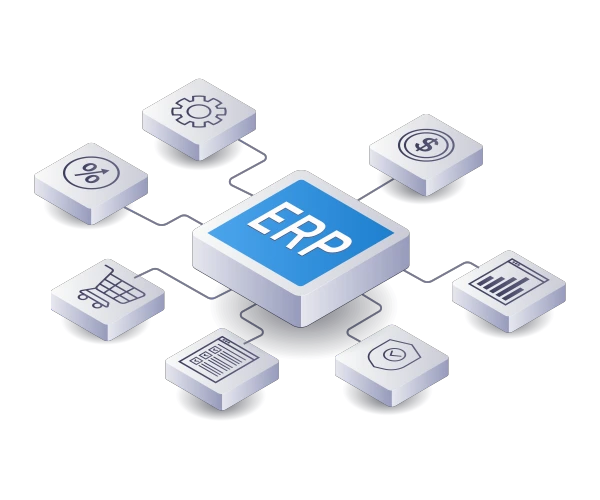
For businesses that need Singapore GST compliance alongside foreign-currency accounting, a multi-currency ERP Singapore solution can bring accounting, tax, reporting and other finance processes into one system.
In most cases, handling multi-currency is rarely the only driver of an ERP choice, it tends to be one requirement among others. This is joined by CPF payroll management, GST compliance in general (or a broader spectrum of Singapore reporting requirements), and if multi-entity operations (more than a single registered company entity), multi-entity consolidation and reporting. Vendors offering Singapore localisation for Odoo, for example; companies like SerpentCS for example, typically provide Singapore accounting out-of-the-box which includes GST treatment and foreign exchange rates as part of a complete local accounting layer rather than a separate bolt-on.
This can work for a company that must handleSingapore statutory reporting anyways and happen to also deal in overseas currencies.
If the sole business challenge is proper foreign currency invoicing, then a light-touch accounting solution designed specifically for it might prove simpler than implementing a complete ERP.
Looking for an Odoo ERP development company in Singapore? Let’s discuss your business needs, explore the right Odoo solution, and have a cup of coffee.
Looking for an Odoo ERP development company in Singapore? Let’s discuss your business needs, explore the right Odoo solution, and have a cup of coffee.
FAQ
Singapore GST treatment for foreign currency transactions can involve exchange-rate requirements that differ from the rate used for financial accounting. Businesses should therefore ensure that their accounting system can distinguish the exchange-rate treatment required for GST reporting from the rate used for general accounting.
When a Singapore GST-registered business issues or receives a foreign currency transaction, the GST calculation and reporting may require the foreign currency amount to be converted into Singapore dollars. Businesses should apply the applicable IRAS requirements consistently and ensure that the GST amount reported is supported by the underlying transaction records.
A realised FX gain or loss generally arises when a foreign currency transaction is settled and the exchange rate has changed. An unrealised FX gain or loss arises when a monetary foreign currency balance is revalued at a reporting date but has not yet been settled. Proper accounting treatment is important for accurate financial reporting.
A Singapore company may have a functional currency other than SGD depending on the economic environment in which it primarily operates. However, functional currency, presentation currency and tax reporting requirements should not be treated as the same thing. Businesses should assess the applicable accounting requirements before configuring their ERP or accounting system.
Businesses should follow the applicable IRAS requirements for the exchange-rate method and source used for GST purposes. The important consideration is not simply how frequently an ERP updates currency rates, but whether the rate used for GST calculations is appropriate, consistently applied and properly documented.
The tax treatment of foreign exchange gains and losses can depend on the nature and circumstances of the transaction. Revenue and capital transactions may receive different tax treatment, so businesses should not assume that every FX gain or loss is treated identically for Singapore tax purposes.