A practical guide to managing structured purchase tenders inside Odoo
Procurement teams often manage the same process across emails, spreadsheets, vendor quotations, approval messages, and purchase orders. As the number of vendors and purchase requirements grows, this fragmented approach makes it harder to compare bids, maintain an audit trail, and convert the selected offer into a controlled purchasing transaction.
Odoo 19 provides a strong foundation for purchase management. A dedicated Odoo Purchase Tender Management solution extends that foundation by bringing the tendering and vendor-bidding workflow into a more structured process. Instead of treating each RFQ as an isolated transaction, procurement teams can organize a requirement as a tender, invite or evaluate vendors, review quotations, select the best commercial option, and move toward purchase order creation - all from one workflow.
What Is Purchase Tender Management in Odoo?
Purchase tender management is the process of requesting competing quotations from multiple suppliers for the same purchasing requirement and evaluating those offers before placing an order. It is especially useful when organizations need competitive pricing, vendor comparison, controlled procurement approvals, and better visibility into why a particular supplier was selected.
A tender-centric process creates a single reference point for the requirement, vendor participation, RFQs, quotation analysis, selected bids, and resulting purchase orders. This reduces dependence on disconnected spreadsheets and email threads, and makes procurement easier to monitor end to end.
Why Traditional Tender Management Becomes Difficult
- Multiple RFQs are created and tracked independently, making comparison difficult
- Vendor quotations arrive through different channels and require manual consolidation
- Procurement teams spend time comparing price, quantity, and commercial conditions in spreadsheets
- Changes to quantities or vendor selections create inconsistencies between tender records and RFQs
- Management lacks a real-time view of tender status, pending decisions, or selected suppliers
- Converting the final decision into purchase orders involves repetitive data entry
How a Purchase Tender Workflow Can Work in Odoo 19
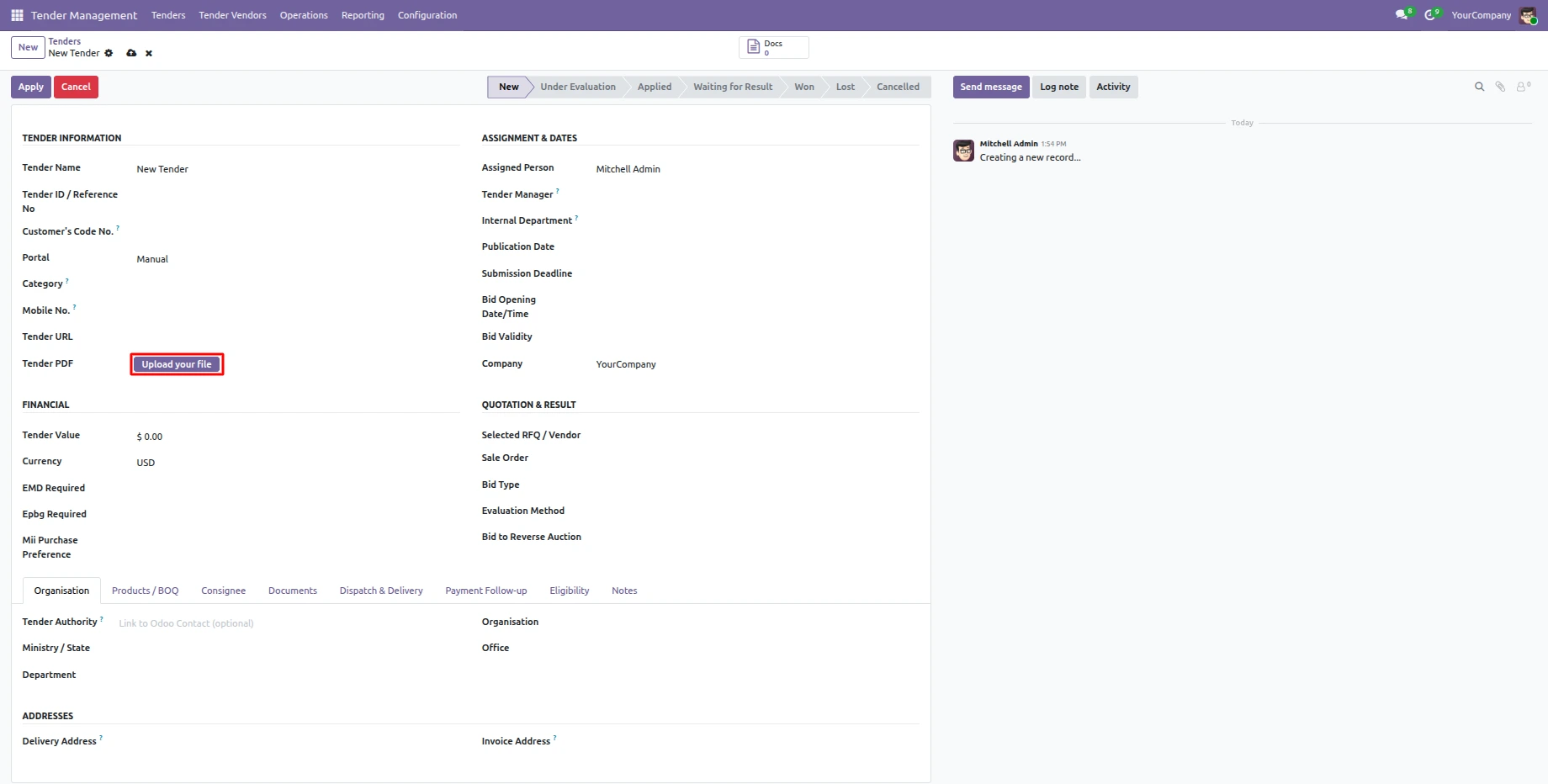
1.Create the tender — Start with the products or services required, quantities, dates, tender information, and other procurement details.
2. Select participating vendors — Identify suppliers who should receive the requirement or be considered for the tender.
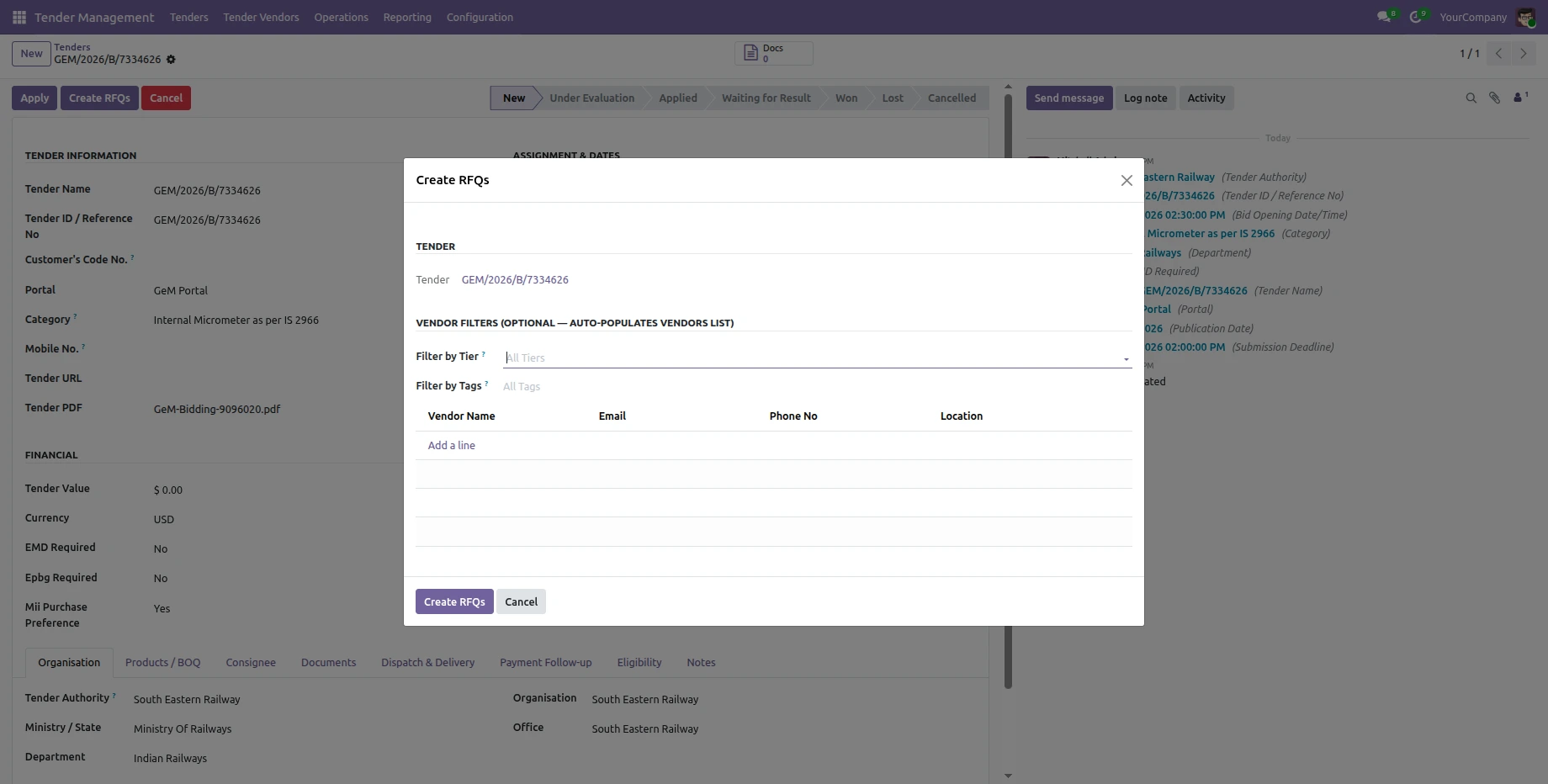
3. Generate RFQs — Create requests for quotation for participating vendors and collect their commercial offers.
4. Review and compare quotations — Bring related RFQs together so procurement users can analyze vendor offers against the tender requirement.
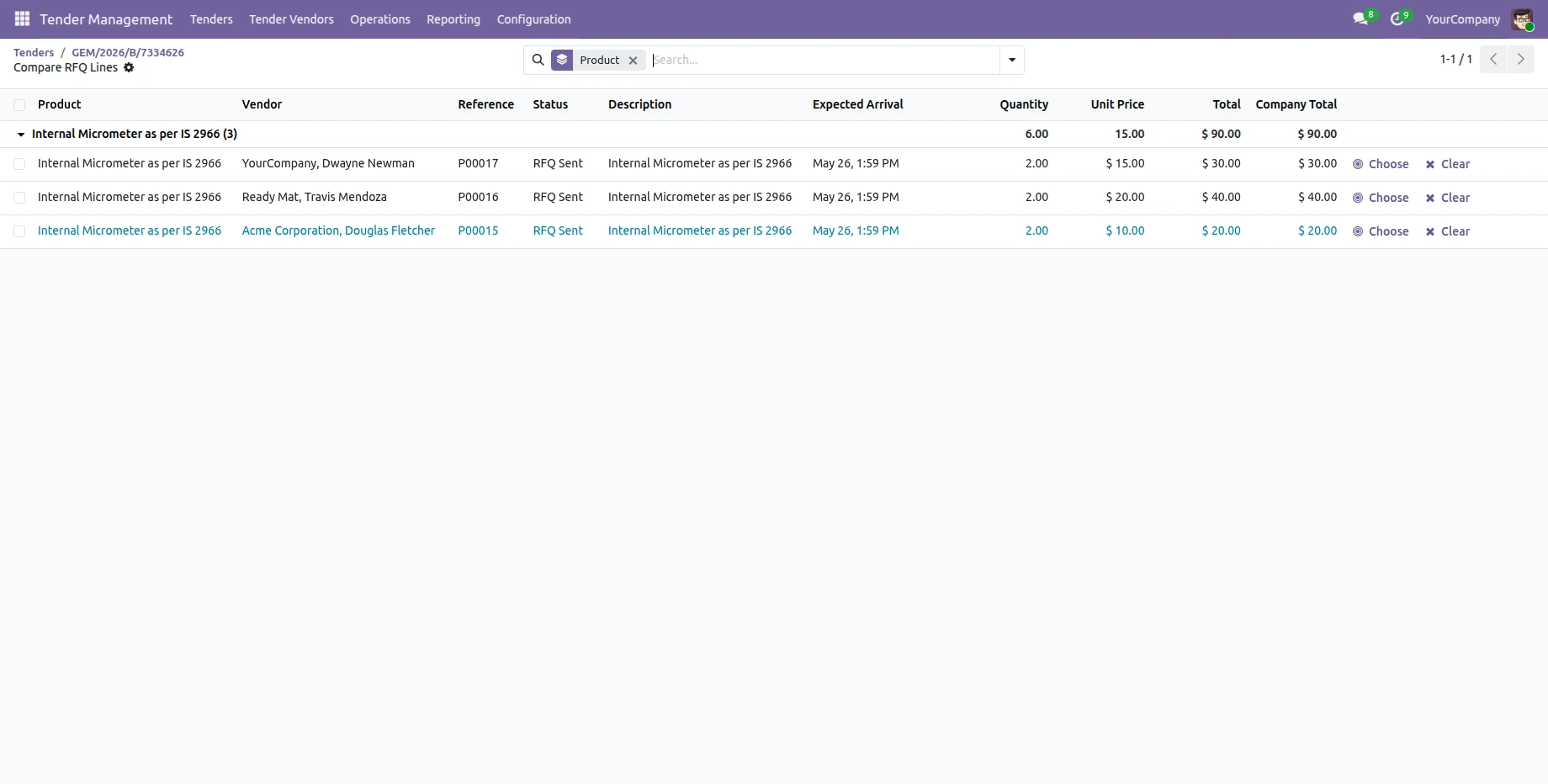
5. Adjust quantities when required — Update quantities or quotation details when the commercial evaluation or business requirement changes.
6. Select the winning offer — Confirm the quotation or lines that meet the organization's commercial and procurement criteria.
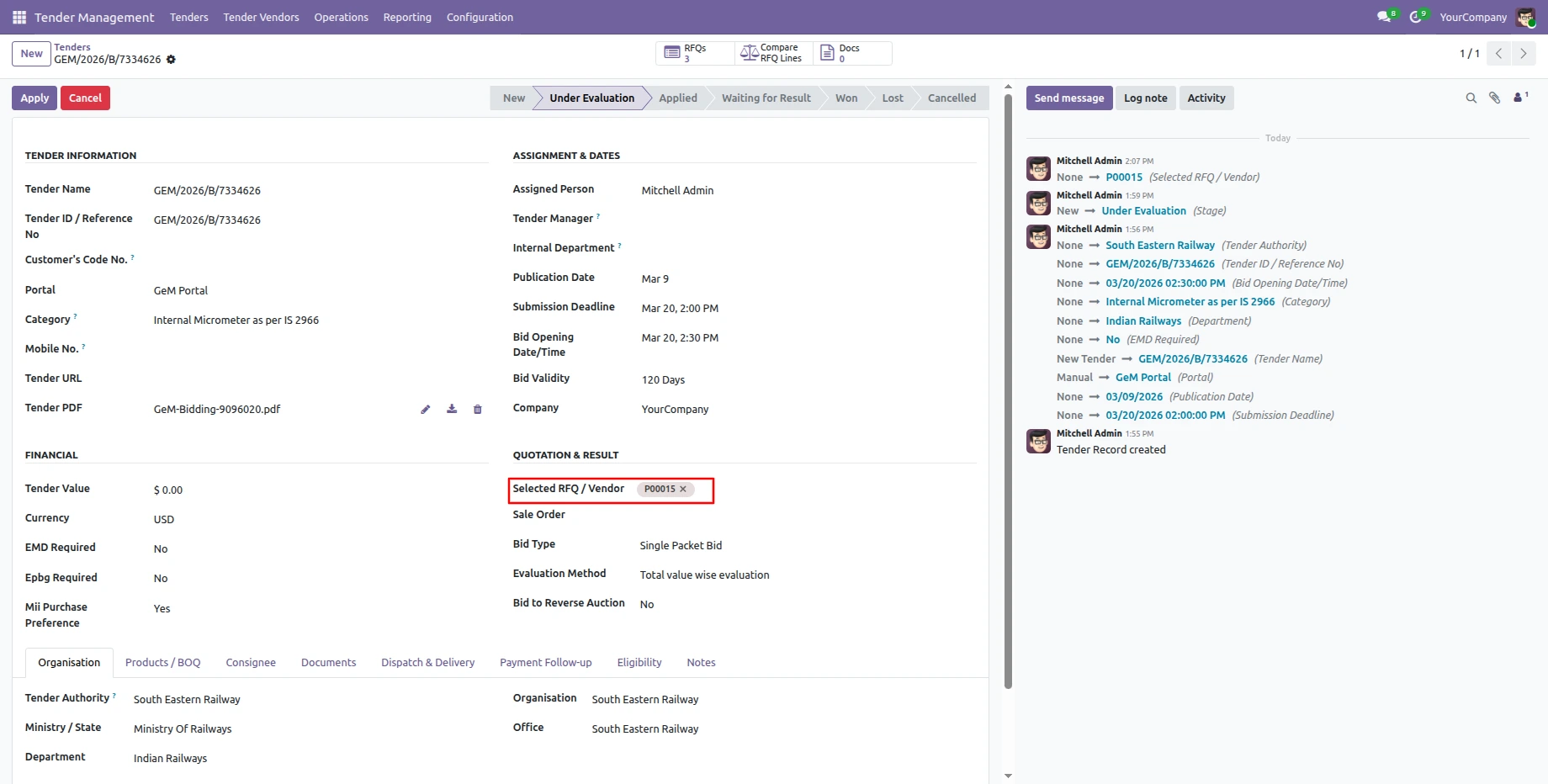
7. Create the purchase order — Convert the selected quotation into the appropriate purchase order, reducing duplicate data entry.
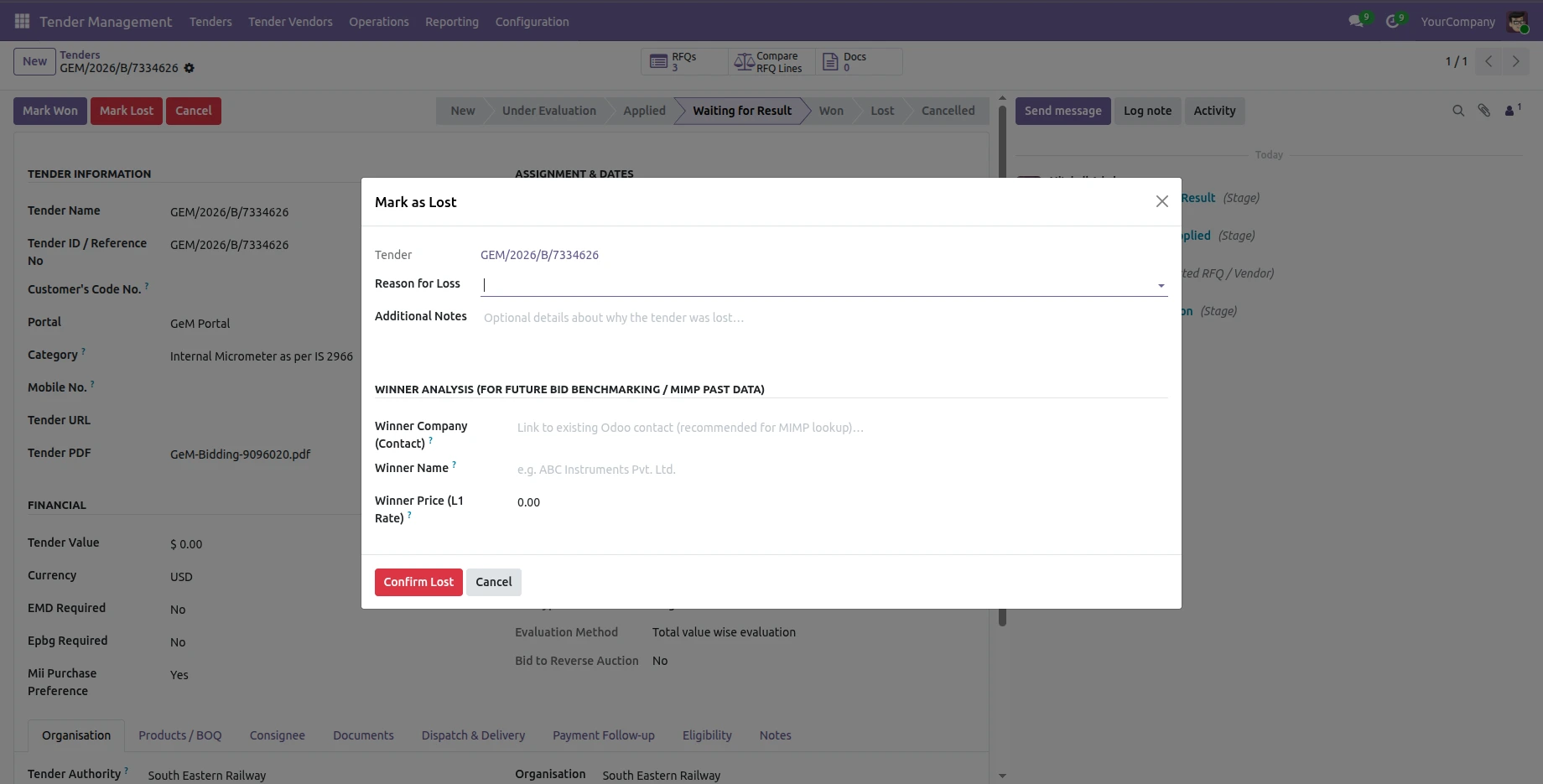
8. Close or cancel the tender — Complete the tender lifecycle by closing the process or cancelling it when the requirement is no longer active.
Key Benefits of Odoo Purchase Tender Management
| Benefit | What It Means for Procurement Teams |
|---|---|
| Centralized tender management | Tender data, vendors, RFQs, evaluation activity, and outcomes stay connected in one process |
| Better vendor comparison | Evaluate competing supplier offers in a consistent workflow instead of switching between spreadsheets |
| Faster procurement decisions | Less repetitive work by linking tender evaluation directly to Odoo purchase transactions |
| Improved traceability | A clearer history of the tender, vendor participation, quotations, decisions, and orders |
| Reduced manual entry | No re-entering product or quantity data when moving from evaluation to purchasing |
| Stronger procurement control | A defined tender lifecycle supports consistent steps and role-based responsibilities |
Who Can Benefit from Odoo Purchase Tender Management?
The approach is particularly valuable for organizations where procurement involves multiple vendors, competitive quotations, formal purchasing controls, or frequent high-value requirements.
Manufacturing companies sourcing raw materials, components, machinery, and services
Construction and infrastructure organizations managing project procurement
Educational institutions purchasing equipment, supplies, and services
Healthcare organizations sourcing medical and operational supplies
Government, public-sector, and semi-government organizations with structured procurement procedures
Trading and distribution businesses that regularly compare suppliers before purchasing
Large enterprises with centralized procurement or category-based purchasing teams
Purchase Tender Management vs. Standard RFQ Processing
| Area | Standard RFQ Process | Tender-Centric Process (Odoo 19) |
|---|---|---|
| Requirement tracking | Centered on individual RFQs | Tender acts as the common reference |
| Vendor comparison | Requires manual consolidation | Multiple vendor offers evaluated together |
| Decision visibility | Spread across RFQs and communication | Decision stays linked to the tender |
| Procurement lifecycle | RFQ → PO | Tender → RFQs → Evaluation → Selection → PO |
| Traceability | Depends on user discipline | Structured, end-to-end record |
Example: A Manufacturing Procurement Scenario
Imagine a manufacturer needs 5,000 units of a component for an upcoming production cycle. Instead of selecting a supplier from a previous quotation, the procurement team creates a tender and approaches several qualified vendors. Each vendor submits an RFQ with pricing and commercial terms.
The procurement team can then review the offers in relation to the same requirement. If the quantity needs to be revised during evaluation, the relevant quotation information can be updated. Once the preferred offer is selected, the procurement process can move forward to purchase order creation. The result is a more traceable process from requirement to supplier selection.
Procurement KPIs You Can Build Around the Process
Tender-to-PO conversion rate
Average time taken to close a tender
Number of vendors invited per tender
Average number of quotations received
Price variance between competing vendor offers
Savings achieved through competitive bidding
Tender cancellation rate
Vendor participation and response rate
Best Practices for a Successful Tender Process in Odoo
- Define clear tender types and procurement categories
- Standardize the information required before releasing a tender
- Maintain an approved vendor list for frequently purchased categories
- Set realistic quotation deadlines and delivery expectations
- Evaluate vendors on more than price — factor in quality, delivery, warranty, and payment terms
- Keep tender-related communication and supporting documents attached to the relevant Odoo record
- Use role-based access and approval controls for sensitive procurement decisions
- Review procurement KPIs regularly to spot delays, supplier concentration, and savings opportunities
Why Bring Tender Management into Odoo?
The biggest advantage is continuity. Procurement teams don't have to manage tender evaluation as a separate activity and then manually recreate the result inside the ERP. A connected workflow keeps procurement information closer to the purchasing process, giving users a single operational context.
For organizations already using Odoo Purchase, a tender management extension is a practical way to formalize competitive procurement without replacing the broader ERP platform. It also provides a stronger foundation for future procurement enhancements such as vendor evaluation, approval workflows, reporting, document management, and integrations.
FAQ
An RFQ is a single request sent to one vendor. A tender is the parent process that groups multiple RFQs from competing vendors around the same requirement so they can be compared and evaluated together.
Yes. Once a winning offer is selected, it can be converted directly into a purchase order, avoiding duplicate data entry.
Manufacturing, construction, healthcare, education, government/public-sector, and trading organizations that regularly compare multiple vendors before purchasing.
No. It extends the existing Odoo Purchase module rather than replacing it, so existing purchase workflows continue to work alongside the tender process.
Explore the Purchase Tender Management app for Odoo 19 and evaluate how it can fit into your organization's procurement workflow. For organizations with specialized tender rules, approval structures, vendor evaluation criteria, or integrations, the workflow can also be assessed as part of a broader Odoo implementation or customization project.