For the most part, finance managers won’t view CPF as an operations issue. You think, “OK, a once-a-month 14th of the month CPF calculation, what’s to it?”, a compliance matter, a set of rates. And for a 5-person outfit pulling off some spreadsheets they downloaded from the internet, CPF probably is just that.
CPF becomes an operations problem when a company either crosses a certain scale threshold, sets up a sister company, a team member hits their 55th birthday (and the employee and employer rates shift mid-year), or they want their payroll expenses to post to their accounting system on time each month without being keyed over from the monthly payslipPDF. That’s when the operational impact, or lack thereof, of how you calculate and submit CPF becomes very apparent.
In this article we explore what makes the calculation and submission process tick - and what gets in the way.
Beyond the percentage - it’s all about your wages.
Under Singapore’s CPF system, contributions in 2026 are made based on a calculation derived from Ordinary Wages (OW) up to an $8,000 monthly cap, and Additional Wages (AW), with an annual CPF Limit of $37,740 for this year. Those employed under 55 years old contributes with a 37% rate (17% employer, 20% employee), stepped down for subsequent age bands such as 55 to 60 years old at a combined rate of 34% (16% employer, 18% employee) and those over the 60s at even lower rates. First and second-year Permanent Residents has separate, scaled-down, wage rate calculation tables to those of Singapore Citizens.
The rates are not particularly difficult to compute as a one-off. But with any substantial volume of employees, it is recomputing the same tables for the same number of individuals every single month that demands operational input. This, however, requires matching them against the relevant wage definitions. Do employees’ wages consist solely of AW or OW? In the absence of clearly segregated wage data, this can lead to miscalculation before a single report is even produced. The same problem then becomes the cause for the failure to remit the full amount to CPF time, from month 1 of the financial year.
Add to this the mandatory remittance day: by the 14th of each calendar month, CPF contributions from all entities need to reach theCPF Board. Interest on late payments starts at 1.5% per month, and further offences may result in fines and even prosecution under the CPF Act. This has resulted in dozens of SMEs making their presence felt in theCPF Board’s registry of convictions over. And not because their in-house payroll person cannot remember the rates - it’s because the reporting and data handling required at this frequency becomes overwhelming.
Why many CPF payroll processes still fall apart
Asked to pinpoint where the bulk of CPF errors typically come from, most Singapore finance managers won’t answer with, “I don’t understand how to calculate CPF.” It’s one of a few process failure points.
1. Age related changes - Birthday or ‘Anniversary’ month transitions: the moment a staff turn 55, their applicable CPF rates are adjusted to the new rate that applies to the 55-60 bracket from the same month their birthday falls in. Without a system feature prompting such changes automatically, the payroll employee will need to make an informed judgement and ensure, manually, that the correct rate gets applied going forward, likely during one of the more tedious payroll audits. Underpaying CPF amounts on employee wages for multiple consecutive months for years can turn into an audit liability.
2. Where wages are not aggregated into one data source: if your HR system does not integrate with your payroll system, then managing and differentiating of between those wages that constitute as AW and OW can be a manual, often inaccurate, process. This becomes tricky with the varying pay structures including: allowances, commissions, shift differentials, etc. The staff involved tend to become arbiters between finance and hr rules.
3. Multi-entity structure: a singapore group having both a holding company and one or two sub companies under different uen numbers still needs to generate their CPF contributions individually but it becomes quite a task for many groups, where staff operate under a single team. The challenge when their payroll is managed with a 3rd party who doesn’t offer integrated financialReporting for separate legal entities in sg, is manually extracting, filtering, dividing and manipulating raw CPF payroll and accountingdata back into thesg reporting system.
4. Post payroll:manual GL entries posting: many accounting systems are disconnected from the payroll application, forcingfinance departments to post all CPF and salary journals entries to their accounting (GL) software manually from a printed payslip export on the last business day of the month. This alone results in hours of redundant dataentry each month, plus numerous posting entries errors.
When CPFPayroll is part of your accounting system
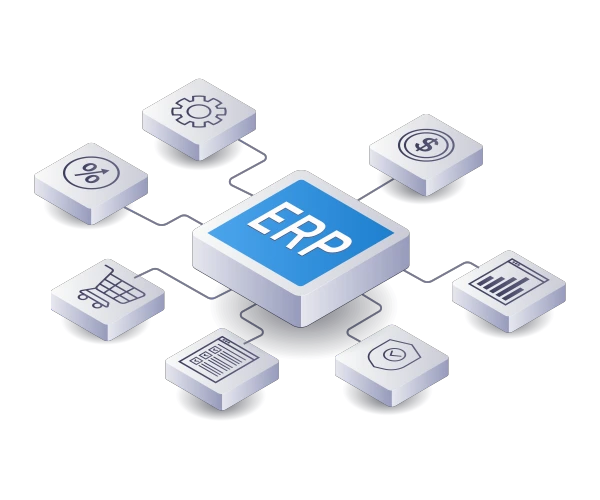
How do you eliminate all of those points of failure, especially where an employee's wage data sits scattered across your accounting software, hr hr data sources and Payroll bureau? You make cpf payroll part of your accounting system rather than separate from it.
Here are the benefits of an end-to-end ERP implementation in Singapore approach versus operating CPF payroll with a disconnected system:
1. Consistent calculation of OW vs AW: by storing all your HR, claims, employee time, attendance and payroll data within the same core ERP system, there is no need for the finance team to differentiate and re-classify specific wage items into an AW/OW definition for each pay run. The system itself does that in one definitive data model.
2. Automatic journal entry posting to the general ledgers (GL): your payroll expense will automatically post to your general ledger (and any subsidiary ledgers as appropriate) in real-time, eliminating the need for a manual data entry or copy/paste frompayslips to journal entries.this not only saves staff hours each month but greatly reduces the opportunity for error.
3. Automatic date and age driven rate changes: an ERP module aware of each employee’s age can, and should, flag themost the change applies so that no manual review of their DOB needs to occur to ensure new CPF rates are applied and correct submissions are generated for that month.
In essence, Integrating CPF Payroll into your core accounting system ensures the accuracy, and eliminates the month-end grind, of CPF reporting. It’s a fundamental component of keeping thelights on,especially for multinational Singapore subsidiaries.
Three scenarios this plays out differently
A growing Singapore SME, say twenty to forty staff, typically begins on a spreadsheet or simple payroll tool then quietly outgrows it. Rarely is the catalyst the CPF error itself; instead, it's that finance has started spending an outsized amount of time each month to reconcile payroll and the books, or that staff growth makes manual tracking error-prone. For this business, the issue is not so much whether to automate CPF calculation (most modern payroll tools do it acceptably), but whether payroll sits in the same system as accounting, or if an standalone payroll tool with a good export/API to the accounting software is sufficient. For a company with a single entity and a uncomplicated cost structure, a well-integrated stand-alone tool is generally the more fitting solution.
A regional HQ managing ASEAN subsidiaries has a different problem entirely. Only the Singapore entity pays CPF, but group finance wants consolidated reporting across the Singapore, Malaysian, and Indonesian operations. Here, a single payroll point product per country results in the very multi-entity reconciliation challenge mentioned above: an multi-entity ERP that can run CPF correctly for the Singapore UEN and consolidate at group level without blending employee populations is performing a fundamentally different task than a single-country payroll app.
A Singapore manufacturer using shift workers faces additional complexity with overtime, allowances and shift differentials being factored into calculations of Additional Wage. In this case, the operational efficiency of integration lies less in CPF itself, and more in direct transit of attendance data to payroll – avoiding the need for manual data re-keying from time sheets – with CPF calculation only ever as accurate as the wage data fed into it.
What to investigate before you choose a system or provider
Whether you select an ERP with native payroll, a dedicated Singapore payroll solution, or out-source to a payroll bureau, the questions you need to ask remain largely the same:
Does the system automatically split Ordinary Wage and Additional Wage, or do you have to define the classification of each pay element for each run?
Does it actively highlight age-related rate changes, based on date of birth, rather than leaving you to spot them?
If you have more than one entity, does the system run separateCPFsubmissions, but allow consolidation reporting?
Does it post automatically to the general ledger, and can finance trace a figure in the accounts back to the payroll calculation without keying anything in themselves?
How does theCPFBoard rate table remain up to date (it changed again on 1st January 2026), and who is responsible for that – you or the vendor?
When it comes to I RASAuto-InclusionScheme andyear-endIR8A Preparation, can the system generate these, or do you have to pull outputs and stitch together the final forms yourself?
A business with a single entity, a constant head count, and finance staff comfortable enough exporting payroll to their accounts software once a month can be very well served by a stand-alone payroll tool. The case for incorporatingCPFpayroll into an overall ERP grows with multiple entities, increasing headcount which compromises the accuracy of manual reconciliation, or as a means of keeping pay linked to the existing ERP accounting function seamlessly. Without such factors present, the drive to integratepayrollin its own right often adds unnecessary expense without saving significant amount of effort.
Where a vendor like Serpentcs fits in (and where not)
Companies integrating CPF payroll with an existing ERP system, like Serpentcs’s Singapore localisation of Odoo, usually address the multi-entity and GL-integration requirement – using a single ERP to handle CPF, SDL and the other IRAS calculations alongside the company’s accounting, so payroll posts through the books rather than beside them. This approach makes sense for a Singapore company that already use, or plans to migrate to, an ERP for their overall financial and operational management and wants payroll included.
This approach makes less sense for a company with a sole entity in Singapore that only need accurate, compliant CPF payroll and no imminent plans to run its other operations through an ERP. Here the costs of ERP-level implementation and change management may exceed the potential benefits, so a focused local payroll solution is more appropriate. The right approach to take depends on the entity structure, headcount trajectory and the extent to which the rest of the company’s finance and HR data resides in a single system.
The Bottom Line CPF Payroll compliance in Singapore is not complex; rates, caps and due dates are public, and these seldom alter. What really determines whether or not Payroll clarifies the business – or makes the finance function spend an excessive amount of time on the reconciliation process each month – are the number of manual handover points between calculating the CPF and having the final figures appear accurately in the company’s accounts. Businesses that first document their existing hand-off points are more likely to choose the correct system or service provider.
Looking for an Odoo ERP development company in Singapore? Let’s discuss your business needs, explore the right Odoo solution, and have a cup of coffee.
FAQ
In 2026, CPF contributions for employees below age 55 are calculated at a combined rate of 37% — 17% employer and 20% employee, subject to the applicable CPF wage ceilings. The blog highlights that CPF rates and tables can change, including the rate-table update effective 1 January 2026, so businesses should ensure their payroll system is kept up to date with the latest CPF Board requirements.
For 2026, CPF contributions are calculated using Ordinary Wages (OW) up to a monthly ceiling of $8,000, together with applicable Additional Wages (AW). This means payroll systems need to correctly identify and classify wage components before calculating CPF contributions. For businesses with allowances, commissions, shift differentials and other variable pay, accurate wage classification becomes particularly important.
CPF contributions must reach the CPF Board by the 14th of each calendar month. According to the blog, interest on late CPF payments starts at 1.5% per month, while further offences may result in fines and prosecution under the CPF Act. Automating payroll calculations and submission processes can help businesses reduce the risk of missed deadlines and incorrect payments.
Yes. An ERP-integrated payroll approach can automatically post payroll expenses and CPF-related journal entries to the General Ledger (GL), reducing manual data entry and reconciliation. Instead of transferring figures from payslips or payroll reports into accounting software manually, an integrated system can connect payroll calculations directly with the company's accounting records.
Yes. Singapore companies operating through multiple legal entities with different UEN numbers need to manage CPF contributions separately for the relevant entities. The challenge is greater when employees, finance teams and payroll processes are shared across the group. A multi-entity ERP can help maintain separate CPF processing while still providing consolidated financial reporting at group level.
It depends on the company's size, structure and existing systems. A small, single-entity business with a straightforward payroll structure may be well served by a standalone Singapore payroll solution with a reliable accounting export or API. An ERP-integrated payroll solution becomes more valuable as the business grows, adds entities, increases payroll complexity or needs payroll and accounting data to remain connected.
Ordinary Wages (OW) are wages earned for employment that are payable for the month, while Additional Wages (AW) cover qualifying payments that are not ordinary monthly wages, such as certain bonuses and other variable payments. Correctly distinguishing OW from AW is important because CPF calculations apply different wage limits and rules. The blog specifically highlights that allowances, commissions, shift differentials and other pay components can make this classification more challenging when payroll and HR data are kept in separate systems.